September 2025
RIAY September 2025
September 01, 2025
The Sorrowful Mysteries - Day 244
AI-Generated Summary: The Strength Found in Sorrow
To pray but a single decade is a good thing, yet to pray three is to build a muscle of the soul, strengthening the will for a slower, deeper attention. This is the work of the first Sorrowful Mysteries: the Agony in the Garden, where a perfect will submitted to a bitter cup; the Scourging at the Pillar, where Love itself was torn by the whip; and the Crowning with Thorns, wherein the true King wore a crown of mockery. It is a hard road, this contemplation of suffering, but it is a transformative journey, one that offers not mere sentiment, but the very grace that is our salvation.
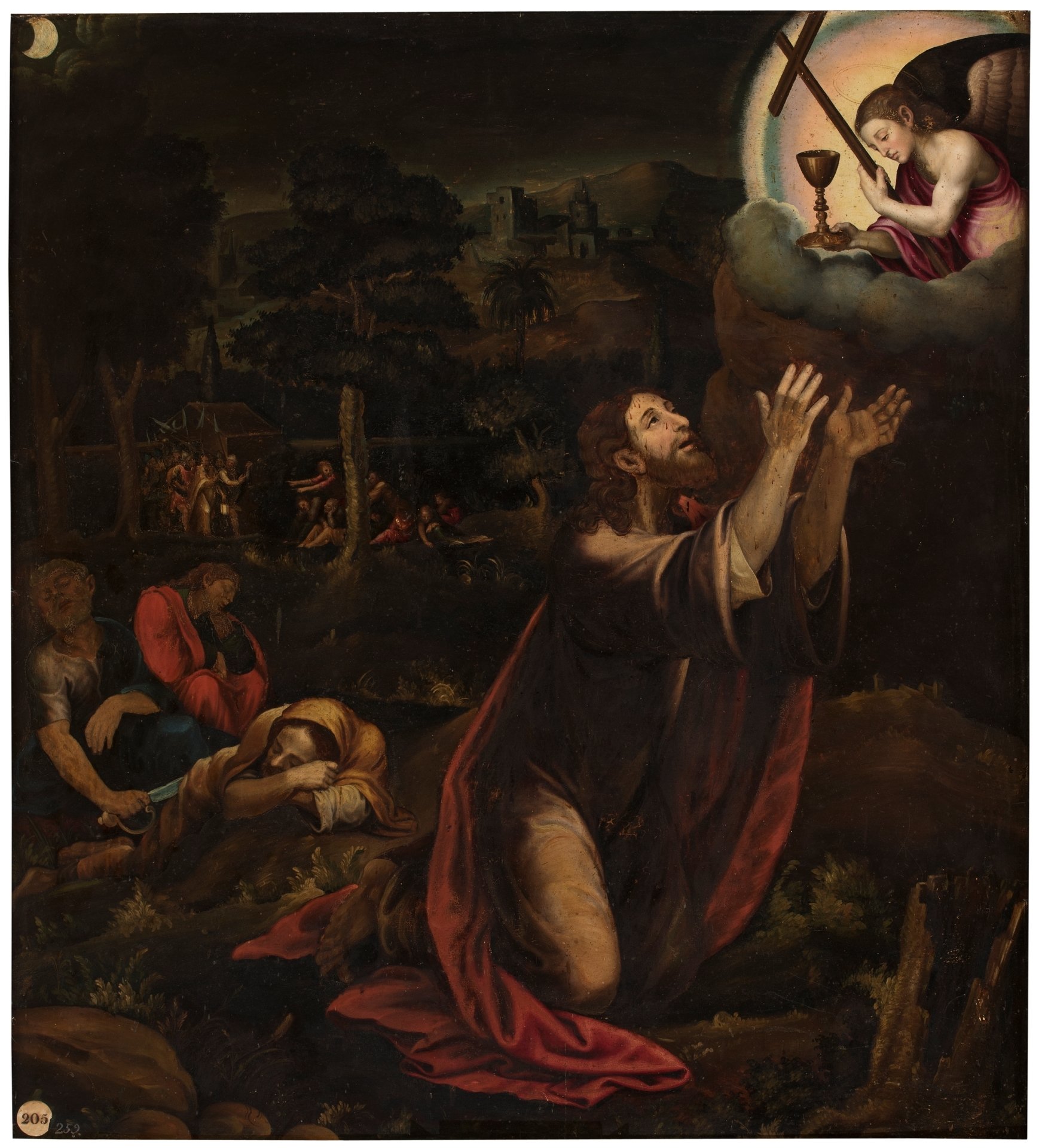
Vicente Masip’s 1550 oil painting at the Prado depicts Christ praying in Gethsemane as angels bring the chalice and apostles sleep
Bouguereau’s 1880 oil painting depicts Christ’s brutal scourging at the pillar with divine resignation, located in La Rochelle Cathedral

Van Dyck’s 1620 Baroque masterpiece in Madrid’s Prado Museum depicts Christ’s paradoxical coronation with thorns

September 02, 2025
The Sorrowful and Glorious Mysteries - Day 245
AI-Generated Summary: On the Final Mysteries
We are asked to consider the last steps of the great drama: the heavy weight of the Cross borne up the hill, the final anguish of the Crucifixion itself, and the quiet that followed. This is the depth of sorrow, the price paid. But the tale does not end in that silence. For the first Glorious Mystery shatters it, turning our minds from the tomb’s seal to its glorious emptiness, from the ultimate sacrifice to the ultimate victory. It is the reversal of all death, the first bright chapter in the story that changes everything.
Orazio Gentileschi’s 1605 Baroque oil painting depicts Christ’s agonizing journey to Calvary under the heavy wooden cross

Pietro Gagliardi’s 1847-1852 fresco in San Girolamo dei Croati depicts Christ’s Crucifixion with the Virgin Mary, John, and Mary Magdalene mourning at the foot of the cross (Stock Image)

Annibale Carracci’s 1593 oil painting Resurrection at the Louvre depicts Christ triumphantly emerging from the tomb as Roman soldiers recoil in awe

September 03, 2025
The Glorious Mysteries - Day 246
AI-Generated Summary: On the Recitation of the Rosary
One finds, in these texts, a common thread not of narrative or description, but of petition and praise. They are not accounts of events to be summarized, but rather the very substance of devotion itself—the repeated and heartfelt prayers of the faithful. The Hail Mary, the Our Father, the Glory Be; these are the well-worn paths upon which the soul travels, not to learn a new thing, but to be reminded of an eternal one. It is the act of turning the mind, again and again, to the sacred mysteries—the Ascension, the Descent of the Holy Spirit, the Assumption—even when the artwork that might illustrate them remains unseen. The value lies not in the novelty of the words, but in the steadfastness of the heart that speaks them. It is a practice wherein the repetition is not emptiness, but a deepening, like a stream that wears away stone not by force, but by constancy.
Christ ascends in a mandorla of light, supported by angels, with the Virgin Mary and astonished apostles below in this 12th-century Byzantine mosaic at St Mark’s Basilica

Titian’s 1546 oil painting Pentecost in Venice depicts the Holy Spirit descending as fire upon Mary and the apostles

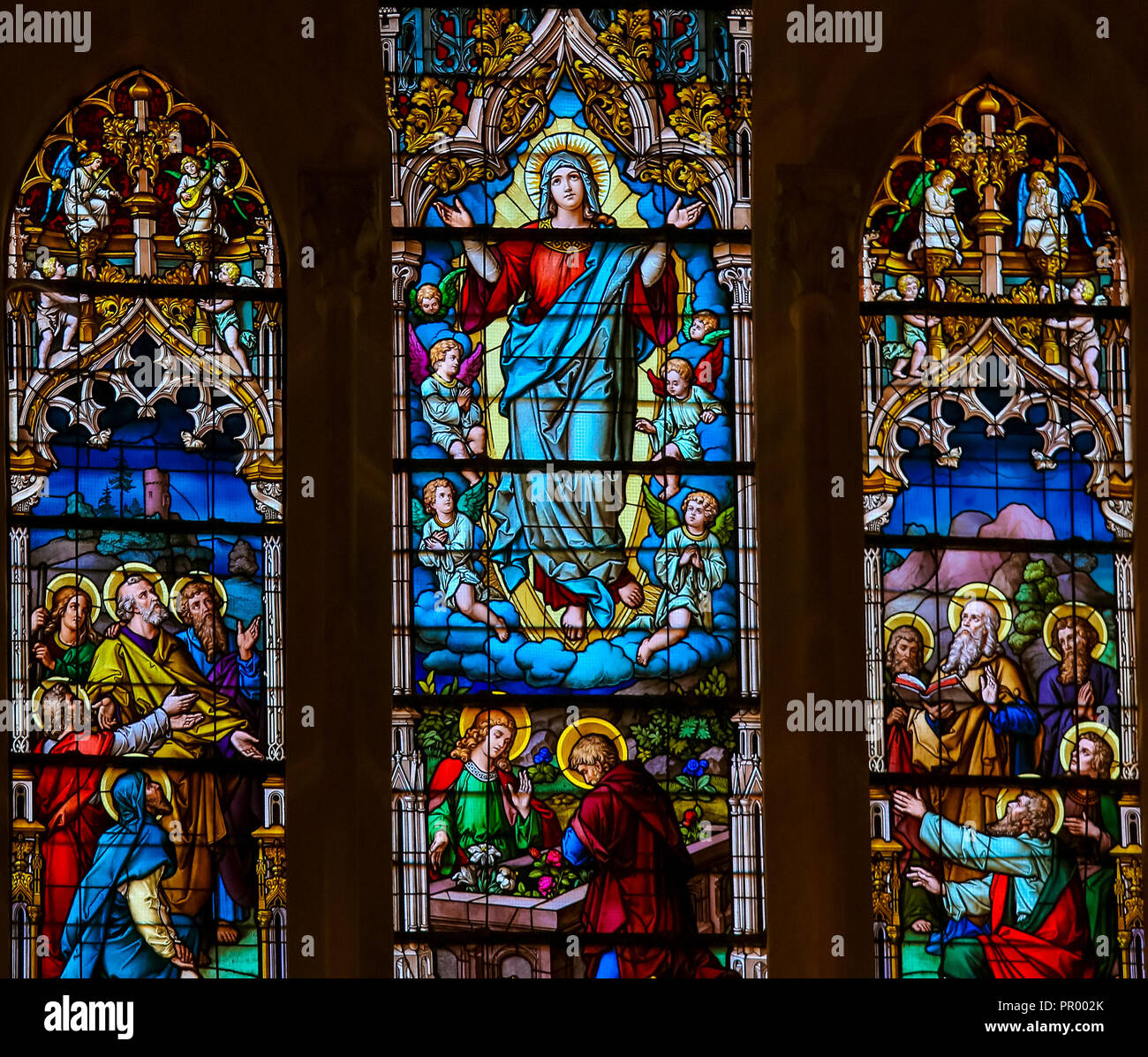
A 13th-15th century Gothic stained glass window in Burgos Cathedral depicting the Assumption of Mary into heaven, welcomed by Christ (Stock Image)
September 04, 2025
The Glorious and Joyful Mysteries - Day 247
AI-Generated Summary: On a Certain Kind of Prayer
We are told of a soul at its prayers, moving through the sacred pattern of the Glorious and Joyful Mysteries. It first contemplates that final and most glorious truth: the Coronation of our Lady as Queen of Heaven. From that height, it turns back to the beginning of joy, to the Annunciation—that great disturbance of the universe where a Virgin is saluted and consents—and then to the Visitation, where blessing is carried from one house to another and joy leaps in the womb.
The rest, as you have found, is not a tale to be summarized but a practice to be performed; the well-worn paths of the Hail Mary and the Our Father, which are not the window through which we look at the landscape, but the very footsteps of the walker upon the road itself.
Giuseppe Borgnis’s 18th-century Baroque fresco depicts the Virgin Mary’s coronation as Queen of Heaven by the Holy Trinity (Stock Image)

Jan van Eyck’s 1434-1436 oil panel The Annunciation depicts Gabriel’s divine message to the Virgin Mary, housed in Washington DC’s National Gallery of Art

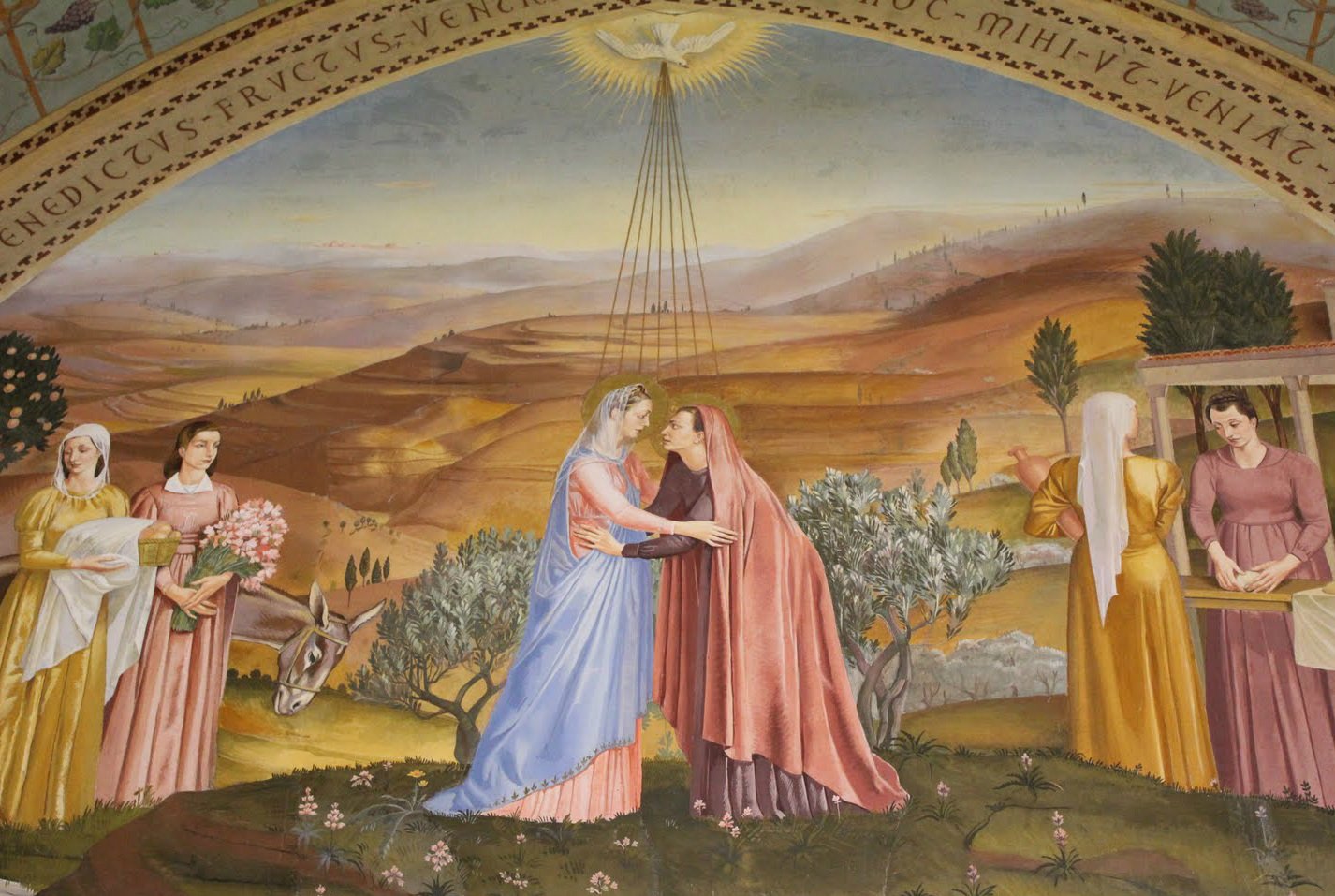
The Visitation depicts Mary and Elizabeth’s sacred encounter, their unborn children recognizing God’s divine work within them
September 05, 2025
The Joyful Mysteries - Day 248
AI-Generated Summary: The Habit of Heaven
One finds in these texts not a discourse, but the very practice of devotion itself—the well-worn path of the Rosary, trodden by countless souls. It is the joyful mysteries upon which the mind is to settle: the Nativity, the Presentation in the Temple, and the Finding of the Child Jesus among the teachers. The substance is not in novel argument but in the familiar, repeated cadences of the Our Father and the Hail Mary, which are to the spirit what a steady rhythm is to a walker. They are the means by which the great truth is not merely considered but, through holy habit, allowed to sink into the very grain of the soul. The value lies not in the variety of the words, which are few and oft-repeated, but in the constancy of the attention turned toward the sacred event. It is an invitation to a quiet companionship in prayer, a shared journey toward a destination both magnificent and humble.
Giovanni Antonio Pellegrini’s 18th-century Rococo Nativity, in oil on canvas at Vienna’s Salesianerkirche, depicts the newborn Christ adored by Mary, Joseph, and angels (Stock Image)

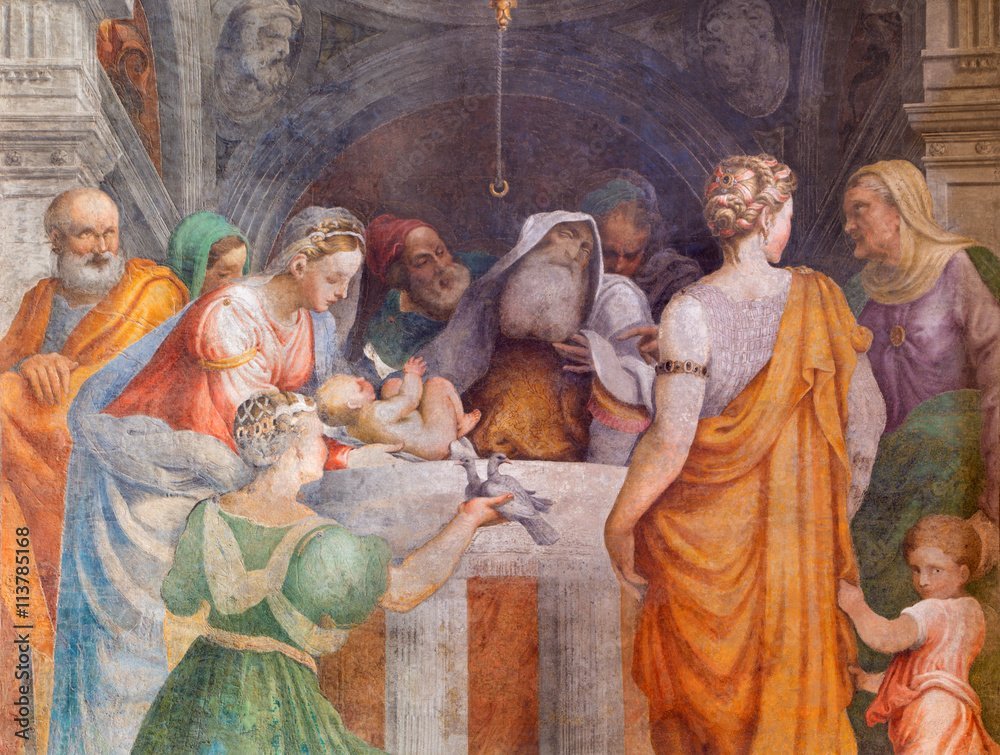
Giulio Campi’s 1547 fresco in Cremona depicts Mary and Joseph presenting the infant Jesus to Simeon in the Temple (Stock Image)
A 20th-century Byzantine mosaic in Lourdes depicting young Jesus teaching elders in the Temple, found by Mary and Joseph (Stock Image)

September 06, 2025
The Luminous Mysteries - Day 249
AI-Generated Summary: On the First Luminous Mysteries
We are invited to consider the first of these Luminous Mysteries, which are themselves a proclamation of that Light which came into the world. The first is the Baptism in the Jordan, where the voice of the Father declares the Son, and the Spirit, in the form of a dove, confirms the truth of the thing. The second mystery is the manifestation at the wedding in Cana, where the water of mere custom was made the wine of joy by His who commands all matter. The third is the Proclamation of the Kingdom, with its call to repentance and the promise of a comfort that the world cannot give. In these, we see the pattern of Heaven breaking through, not to destroy the world, but to fill it, as light fills a room.
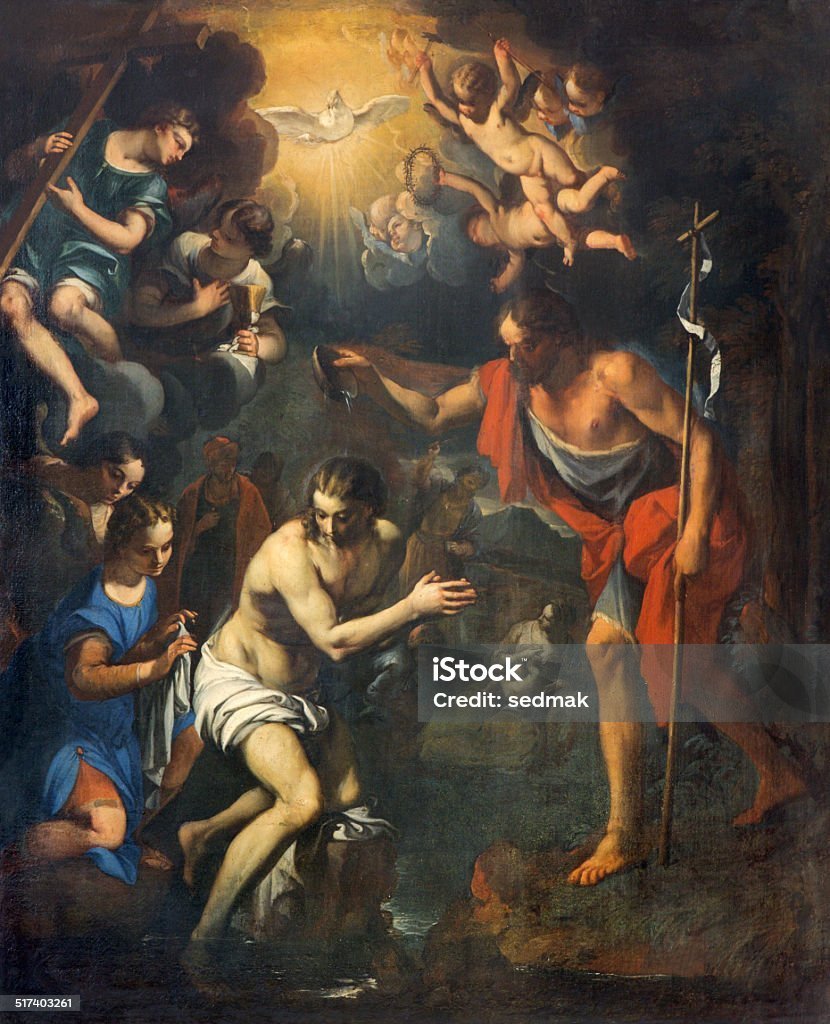
The Baptism of Christ, an Italian Renaissance fresco in Padua’s Church of San Benedetto, depicts Jesus baptized by John as the Holy Spirit descends (Stock Image)
Gerard David’s 1500 oil painting at the Louvre depicts Christ’s first miracle, transforming water into wine at the Wedding at Cana

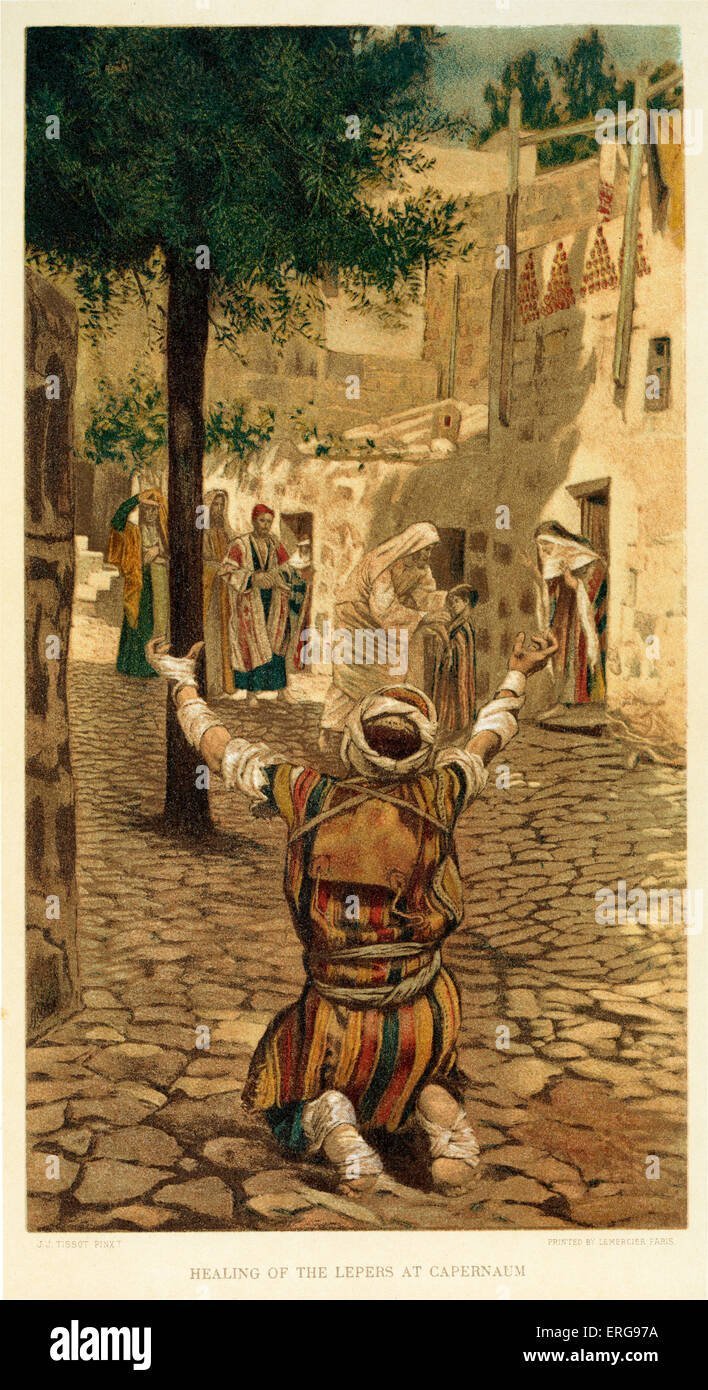
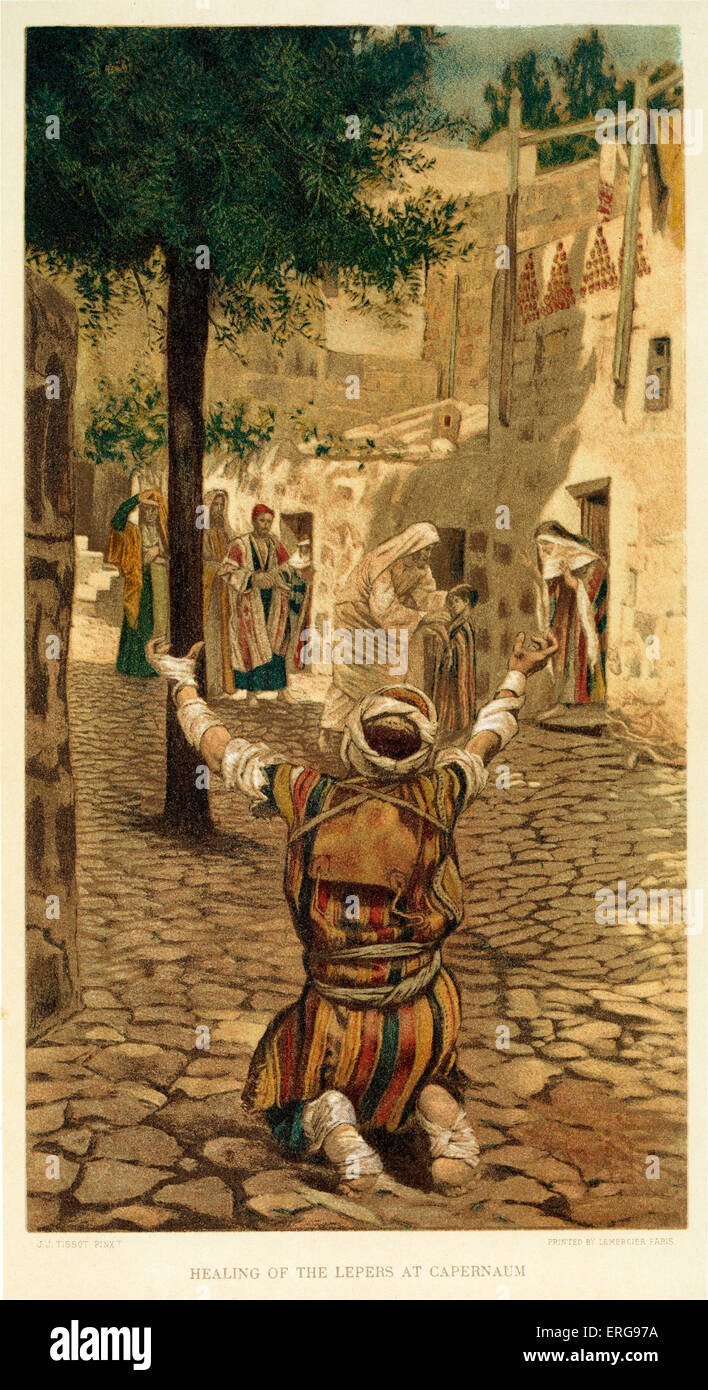
James Tissot’s 1894 gouache painting ‘Healing of the Lepers at Capernaum’ depicts Christ proclaiming God’s kingdom through miraculous healing (Stock Image)
September 07, 2025
The Luminous and Sorrowful Mysteries - Day 250
AI-Generated Summary: On the Recitation of the Mysteries
It is a curious and rather beautiful thing, is it not, how the soul, by the steady repetition of hallowed words, seeks to clothe itself in a garment of prayer? The text presented is not a discourse to be summarized, but rather the very substance of a devotion—the recitation of the Fifth Luminous Mystery, which concerns that most profound of gifts, the Institution of the Eucharist, and the first of the Sorrowful Mysteries, the Agony in the Garden.
One finds here the familiar cadence of the Our Father, the gentle salutation of the Hail Mary, and the solemn praise of the Glory Be, woven together like a tapestry. Their purpose is not to inform the intellect but to form the will, to draw the one who prays ever deeper into the contemplation of these great and terrible and glorious acts. There is no description of art, for the mysteries themselves are the icons before which the heart is meant to kneel. The repetition is the whole of the matter; it is the steps taken along a well-worn path that leads, not to a new idea, but to a familiar and beloved country.
Henry Ossawa Tanner’s ‘Christ and the Disciples Before the Last Supper’ (c 1900, oil on canvas) depicts Christ’s spiritual preparation before instituting the Eucharist

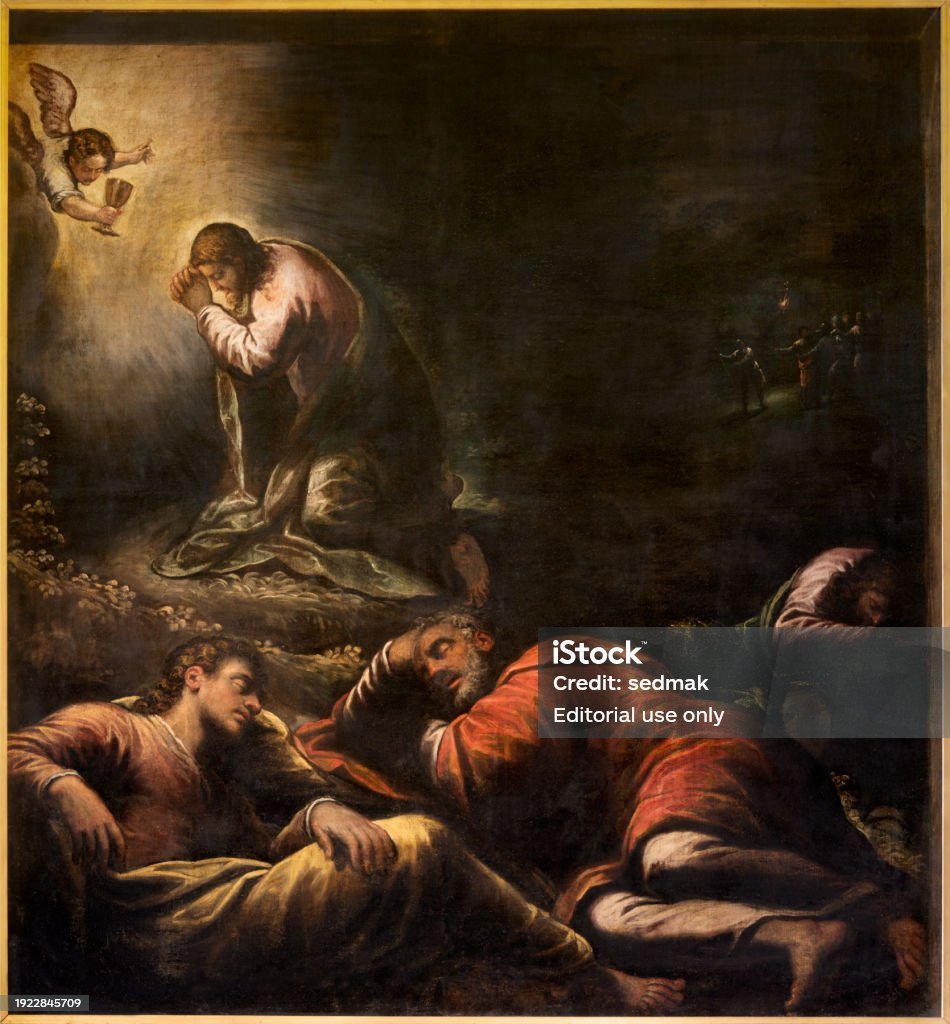
Alessandro Maganza’s ‘The Prayer of Jesus in Gethsemane’ (c 1590-1610) depicts Christ’s agony while His disciples sleep, painted in oil on canvas for Vicenza Cathedral (Stock Image)
September 08, 2025
The Sorrowful Mysteries - Day 251
AI-Generated Summary: On the Reiteration of Prayer
My dear reader, one finds in this text not a discourse or a story, but the very substance of devotion itself—the repeated and heartfelt recitation of prayer. It is the meditation on the Sorrowful Mysteries that forms the core: the Scourging at the Pillar, the Crowning with Thorns, and the Carrying of the Cross. These are not merely recounted but entered into through the familiar and comforting rhythm of the Hail Mary, the Our Father, and the Glory Be. The text is the vessel for this act of worship, a gentle and persistent turning of the soul toward a sacred focus, culminating in a simple expression of gratitude. There is no art here to describe, for the action itself is the object.
Bouguereau’s 1880 oil painting ‘The Flagellation of Our Lord Jesus Christ’ depicts Christ’s brutal scourging with academic precision and divine resignation
Titian’s ‘Christ Crowned with Thorns’ (c 1542–1543) depicts Roman soldiers pressing the thorn crown onto Christ’s head with violent intensity as he endures with serene dignity

Raphael’s 1516-17 ‘Christ Falls on the Way to Calvary’ depicts Christ’s third fall under the cross’s weight during his sorrowful journey to Calvary

September 09, 2025
The Sorrowful and Glorious Mysteries - Day 252
AI-Generated Summary: On Certain Great Mysteries
We are bid to consider a progression of three great and solemn mysteries, as a man might climb a mountain from its darkest vale to its sunlit peak. The first is that final, terrible mystery of sorrow: the Crucifixion of Our Lord, where all the weight of a world’s wrong was laid upon a single frame. From this depth of despair, we are then lifted—as indeed we are always lifted from such depths—to the first glorious mystery: the Resurrection. Here is the great reversal, the divine laughter that answers the world’s grimace, the truth that a pierced hand has forever unlocked the door of death.
And being thus lifted, we are not left as orphans. For the final step in this ascent is the second glorious mystery: the Ascension. It is not a departure, but a coronation; the moment when the Man who walked with us passed through the very veil of the heavens to prepare a place, so that our own nature might forever have a share in the very life of God.
James Tissot’s 1886-94 ‘What Our Lord Saw from the Cross’ depicts the Crucifixion from Christ’s perspective, showing the crowd below in gouache realism

Annibale Carracci’s ‘Resurrection’ (1593, oil on canvas, Louvre) depicts Christ emerging gloriously from the tomb as Roman soldiers recoil in awe
Bernardino Gandino’s ‘Ascension of the Lord’ depicts Christ ascending into heaven as apostles watch in wonder (Stock Image)

September 10, 2025
The Glorious Mysteries - Day 253
AI-Generated Summary: On the Glorious Mysteries
We are asked to contemplate a thing of great simplicity and profound depth: the final Glorious Mysteries. The words themselves are few and oft-repeated, like a well-worn path to a familiar and beloved door. In this repetition, one does not find emptiness, but rather the steady rhythm of a heart turned toward the divine—the Our Father, the Hail Mary, the Glory Be. These are not incantations to change the will of Heaven, but the humble means by which a soul may be shaped to receive it. The mysteries themselves—the Spirit’s descent, the Lady’s Assumption, her Coronation—stand as great, unshakeable facts behind the prayer, like sunlit mountains glimpsed through the mists of our own devotion. The prayer is our looking; the mystery is the thing seen.
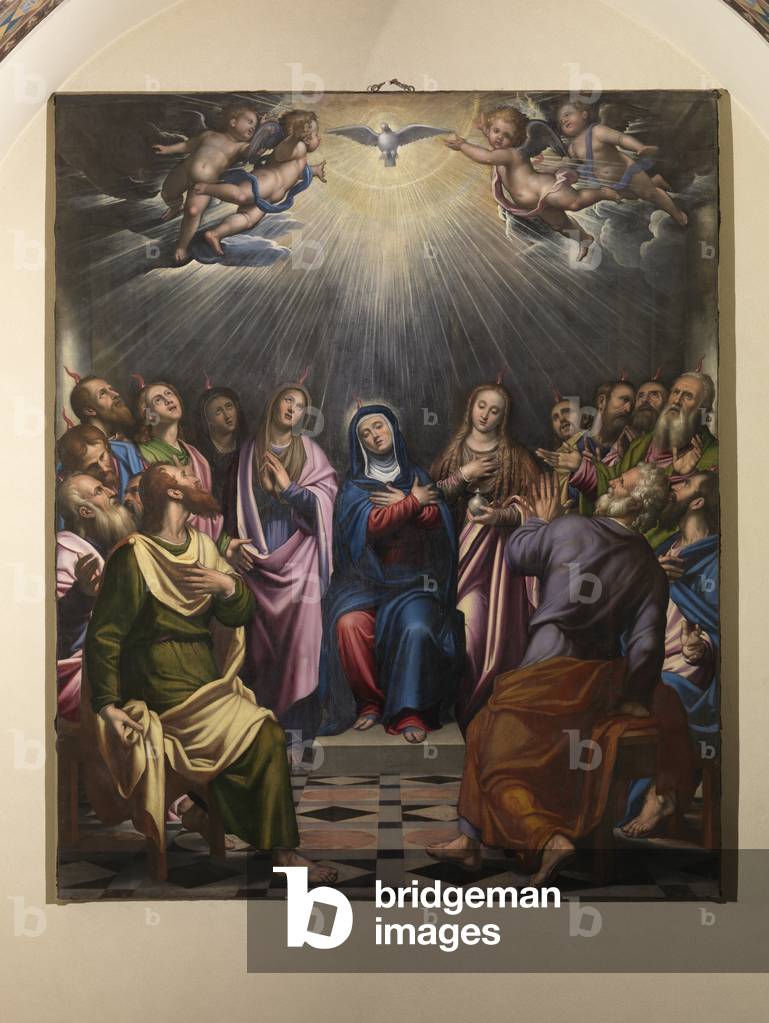
Simone Peterzano’s ‘Pentecost’ (c 1580, oil on canvas) depicts the Holy Spirit descending upon Mary and the apostles in Mannerist style at San Fedele, Milan (Stock Image)
A 13th-15th century Gothic stained glass window in Burgos Cathedral depicting Mary’s Assumption into heaven, welcomed by Christ (Stock Image)
Diego Velázquez’s ‘Coronation of the Virgin’ (c 1641-1644), an oil on canvas at the Prado, depicts the Holy Trinity crowning Mary as Queen of Heaven

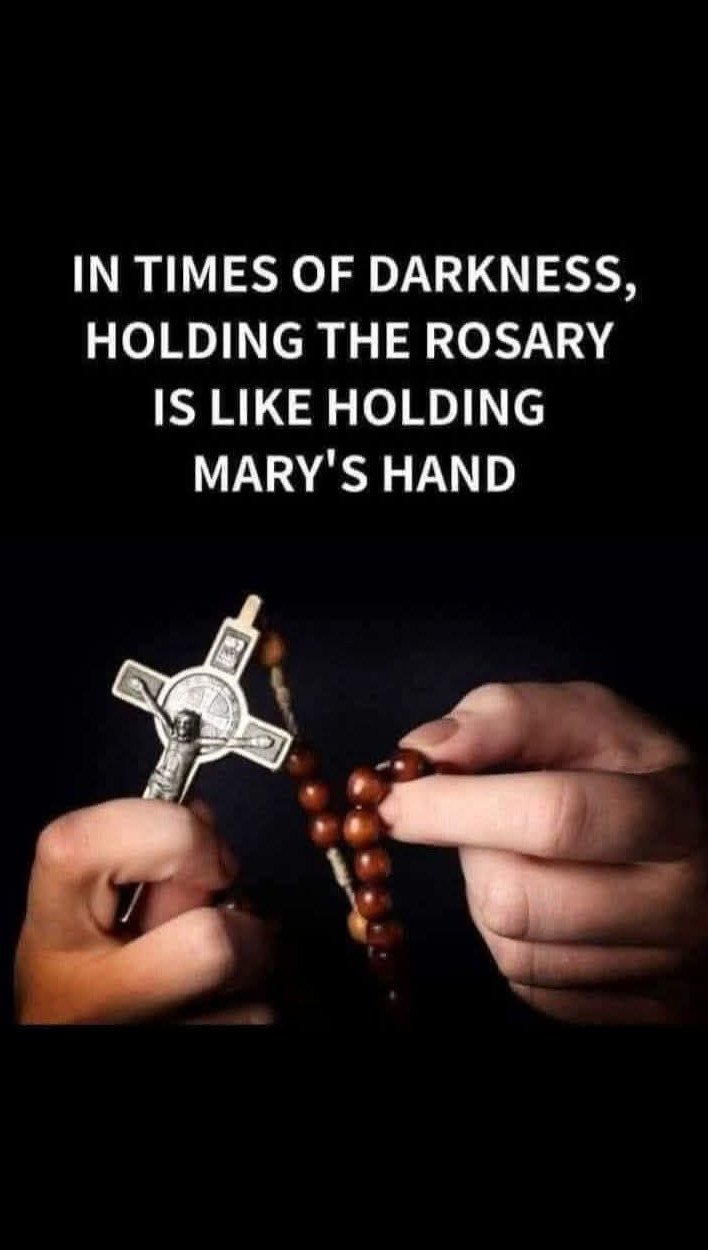
Holding Mary’s Hand
September 11, 2025
The Joyful Mysteries - Day 254
AI-Generated Summary: The Recitation of Joyful Mysteries
One finds here not a discourse to be parsed, but a well-worn path for the feet of devotion. It is the repetition of ancient and familiar forms—the Hail Mary, the Our Father, the Glory Be—spoken not for novelty but for constancy, like a steady rhythm beneath the tumult of our days. The purpose is not to inform the intellect, but to form the soul through a humble return to the same words, the same truths, the same mysteries. The heart of the matter lies in the naming of the Joyful Mysteries themselves: the Annunciation, the Visitation, and the Nativity. These are the great pillars around which the prayer circles, the fixed points of light by which the faithful orient their hearts toward a singular, joyful hope.
Fra Angelico’s ‘The Annunciation’ (mid-1430s), a tempera panel in Madrid’s Prado, depicts Gabriel’s announcement to Mary within Renaissance architecture

‘The Visitation’ depicts Mary and Elizabeth’s sacred encounter, recognizing God’s work within them at Ein Karem
Giovanni Antonio Pellegrini’s 18th-century Rococo ‘The Nativity’ in Vienna depicts the newborn Christ adored by Mary, Joseph, and angels (Stock Image)
September 12, 2025
The Joyful and Luminous Mysteries - Day 255
AI-Generated Summary: On Three Mysteries
We are told of a child, presented in the temple according to the old law, a sign of obedience and humility. Then comes the finding of the same child, not lost but about his Father’s business, astounding the learned men with his understanding. And from these joys we move to a light unveiled at the river Jordan, where the heavens themselves were opened at his baptism, and the Voice declared the beloved Son. In these things we see the pattern: the humble act, the divine revelation, and the quiet, staggering truth that the ordinary world is charged with a grandeur it cannot contain.
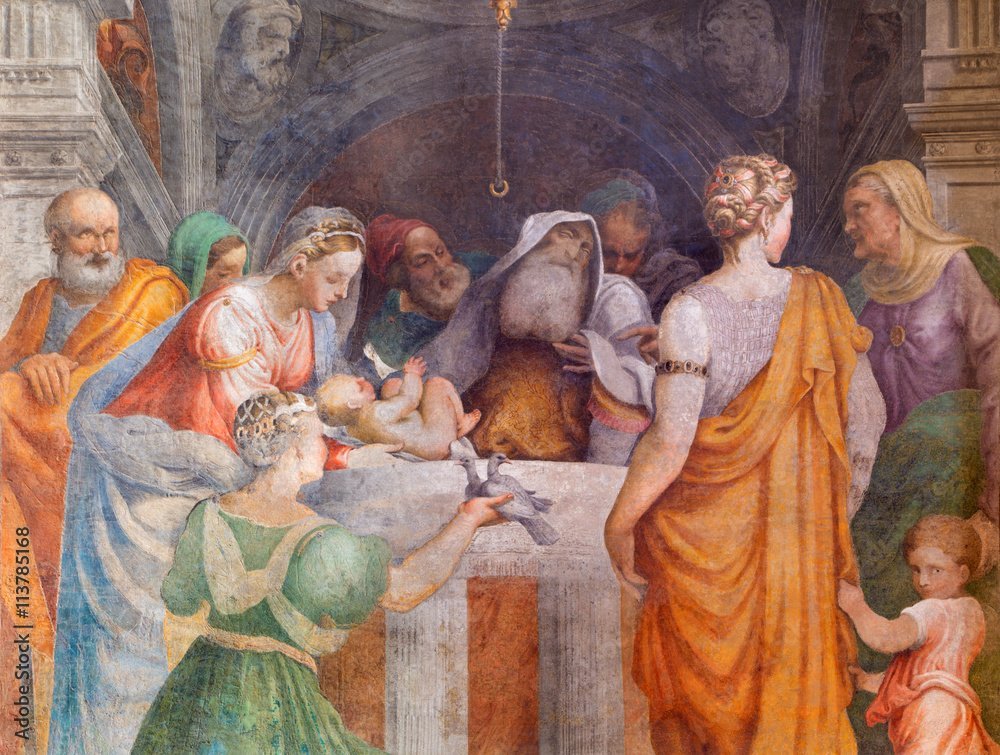
Giulio Campi’s 1547 fresco ‘The Presentation of Jesus in the Temple’ in Cremona depicts Mary and Joseph presenting the infant Jesus to Simeon (Stock Image)
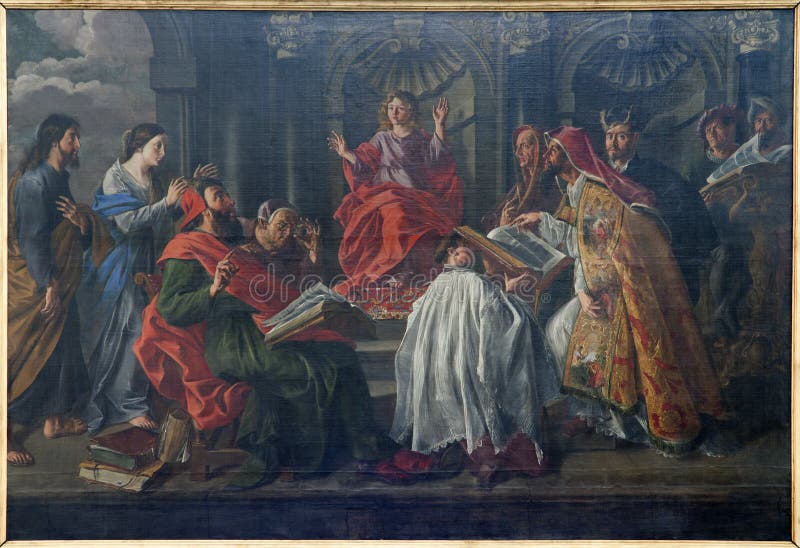
The young Jesus astonishes Temple scholars with divine wisdom in ‘Jesus Teaching in the Temple’ (Stock Image)
Alexander Ivanov’s 1837-1857 oil painting ‘Apparition of the Messiah’ depicts John the Baptist revealing Christ to a diverse crowd at the Jordan

September 13, 2025
The Luminous Mysteries - Day 256
AI-Generated Summary: On the Recitation of Prayer
My dear reader, one finds in this text not a discourse or a tale, but the very substance of devotion itself—the repeated and rhythmic cadence of ancient prayers. It is the echo of a soul at its work, a practice as old as the hills upon which the faith was built. Here are the Luminous Mysteries contemplated: the turning of water into wine at Cana, the proclamation of a coming Kingdom, and the glorious Transfiguration upon the mount. Yet the text does not pause to paint these scenes for us; rather, it is the vehicle for the prayer that such mysteries inspire. It is the earnest repetition of the Hail Mary, the Our Father, and the Gloria Patri—the simple, well-worn tools for shaping the heart. There is a lesson here, that the value is not in novelty of words, but in the faithful return to the old and good paths, much as a man finds comfort in the familiar steps of a well-trodden path through his own garden.
Gerard David’s ‘The Marriage at Cana’ (c 1500, oil on wood, Louvre) depicts Christ’s first miracle at the wedding feast
Lorenzo Lotto’s 1525-1530 oil painting ‘Christ and the Adulteress’ in the Louvre depicts Jesus proclaiming mercy and forgiveness

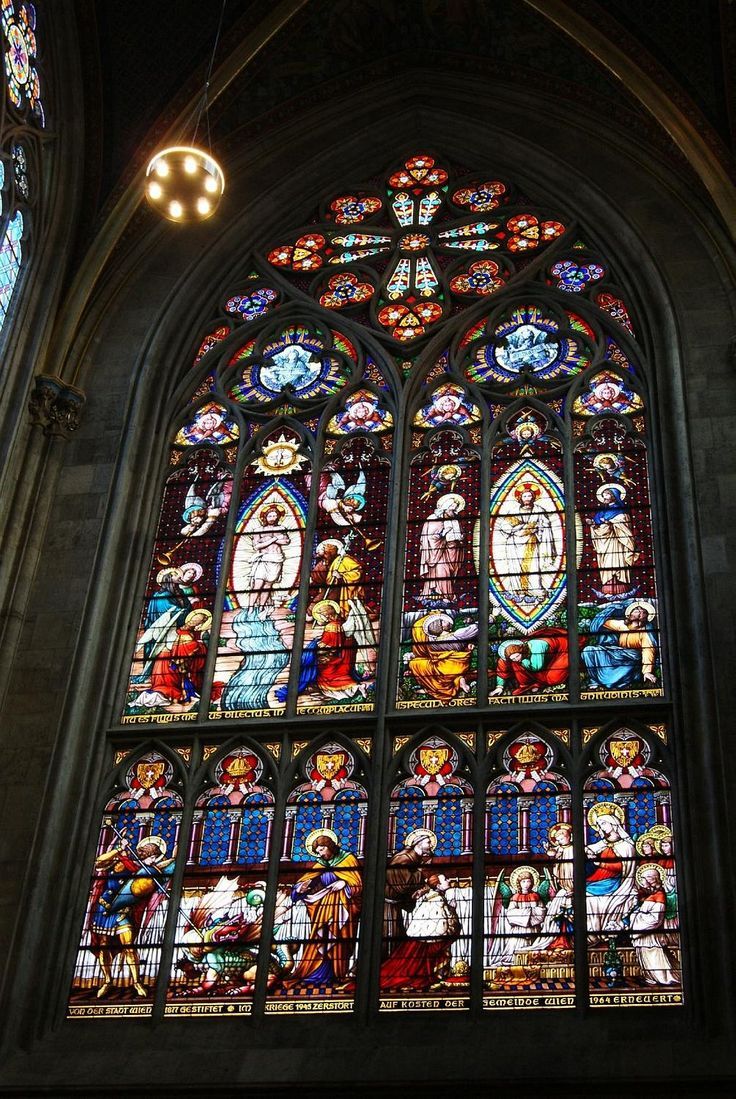
‘The Transfiguration’ in Vienna’s Votive Church depicts Jesus radiant in divine light before his disciples with Moses and Elijah
September 14, 2025
The Luminous and Sorrowful Mysteries - Day 257
AI-Generated Summary: On a Certain Sequence of Holy Mysteries
We are given a glimpse into a most solemn progression, where the soul moves from the light of a final, glorious gift to the gathering shadows of a coming sorrow. It begins in that upper room, with the fifth Luminous Mystery—the Institution of the Holy Eucharist. This is the great and final sacrament of Light, the gift of His very self, the sustenance for the dark road ahead.
And that road is taken up immediately thereafter, as the meditations turn, as they ever must, to the Sorrowful Mysteries. The journey into shadow commences with the Agony in the Garden, that lonely struggle where all weight of the world was felt in a cup, and proceeds directly to the Scourging at the Pillar, the first brutal yielding of the sacred flesh to the cruelty of fallen men. The text provides no further particulars on artworks or the finer points of meditation, leaving us only with the stark and awful names of these great and terrible truths.
Henry Ossawa Tanner’s 1900 oil painting ‘Christ and the Disciples Before the Last Supper’ depicts the spiritual preparation for the Institution of the Eucharist
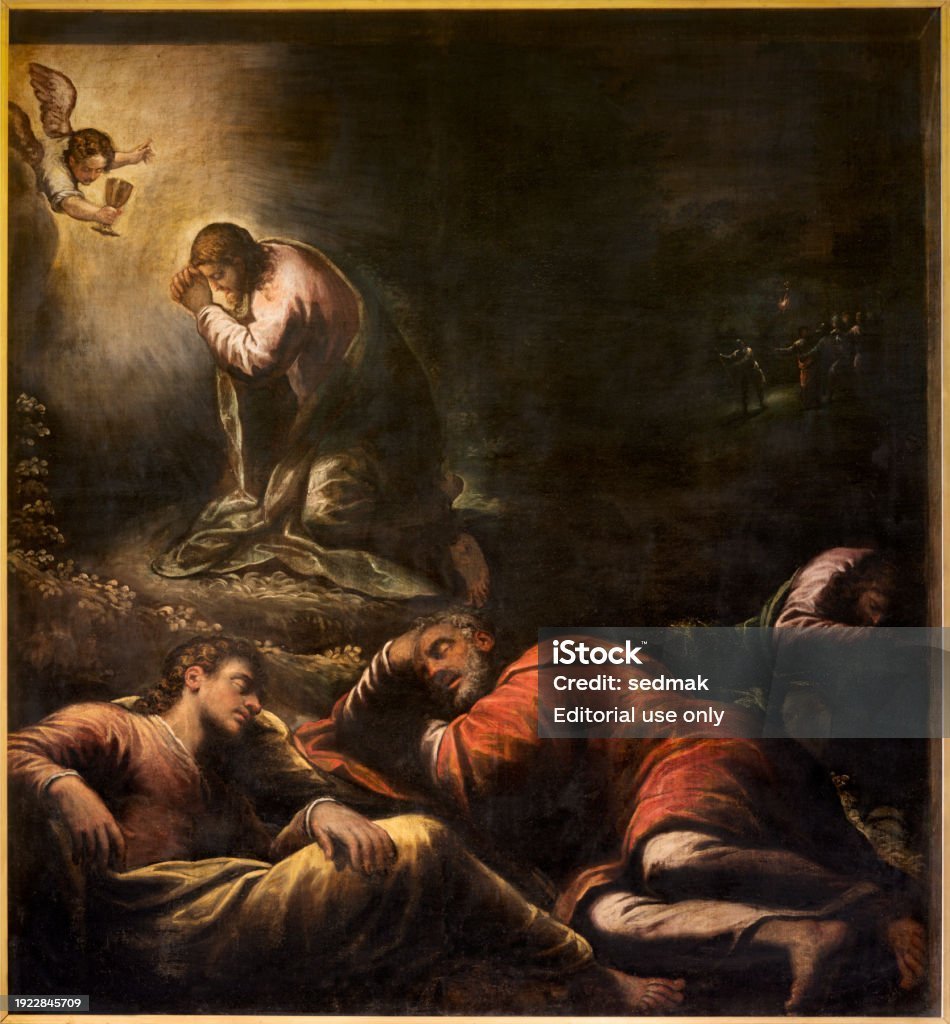
Alessandro Maganza’s ‘The Prayer of Jesus in Gethsemane’ (c 1590-1610), oil on canvas in Vicenza Cathedral, depicts Christ’s agony while His disciples sleep (Stock Image)
Bouguereau’s 1880 oil painting ‘The Flagellation of Our Lord Jesus Christ’ depicts Christ’s brutal scourging with divine resignation, located in La Rochelle Cathedral
September 15, 2025
The Sorrowful Mysteries - Day 258
AI-Generated Summary: The Final Sorrowful Mysteries
We are brought to consider the final acts of a great suffering, where the King of all creation is made a mockery of a king, crowned not with gold but with thorns. Then follows the long and weary road, the bearing of the instrument of one’s own death up the hill of execution. And at the last, the final mystery: the crucifixion itself, the ultimate price paid at the place of the skull. This is the heart of the matter, the sorrow that precedes the joy, the death that must come before the resurrection.
Titian’s ‘Christ Crowned with Thorns’ (c 1542–1543), oil on canvas at the Louvre, depicts Roman soldiers pressing the thorn crown onto Christ’s head with violent solemnity
Pieter Bruegel the Elder’s ‘The Procession to Calvary’ (1564, oil on panel) depicts Christ carrying His cross through an indifferent crowd to Golgotha

James Tissot’s 1886-1894 ‘What Our Lord Saw from the Cross’ depicts the Crucifixion from Christ’s unique perspective
September 16, 2025
The Glorious Mysteries - Day 259
AI-Generated Summary: On the Recitation of the Glorious Mysteries
We find here not a discourse to be parsed, but a path to be walked; the well-worn steps of the Glorious Mysteries. The soul is not invited to a lecture on the Resurrection, the Ascension, or the descent of the Spirit at Pentecost, but is rather taken by the hand and led through them. The repetition of the ancient prayers—the Hail Mary, the Our Father, the Glory Be—is the very manner of the walking. This is not the chatter of men inventing new things to say, but the humble and joyful work of participating in a reality far greater than themselves. The words themselves, though they may appear scant to the critic, are like familiar stones in a path up a holy mountain; their value is not in their novelty but in their placement, leading the traveller ever upward toward the light.
Annibale Carracci’s ‘Resurrection’ (1593, oil on canvas, Louvre) depicts Christ’s glorious emergence from the tomb as Roman soldiers recoil in awe
Bernardino Gandino’s ‘Ascension of the Lord’ depicts Christ ascending bodily into heaven as the apostles watch in wonder (Stock Image)
Simone Peterzano’s ‘Pentecost’ (c 1580, oil on canvas) depicts the Holy Spirit descending as tongues of fire upon Mary and the apostles in Mannerist style, located in Milan’s Church of San Fedele (Stock Image)
September 17, 2025
The Glorious and Joyful Mysteries - Day 260
AI-Generated Summary: On Certain Mysteries
We are told of a progression of wonders, beginning with the fourth, where the Blessed Mother, having finished her course, was assumed, body and soul, into the glory that awaits all who are in her Son. This is followed by the fifth, her Coronation, where she is rightly honoured as Queen of Heaven and Earth by the whole court of the redeemed. And from this glory, the telling turns back to the first beginning: the Annunciation. Here, the great silence of heaven was broken as the messenger was sent to the Virgin, and the world, holding its breath, received its answer.
A 13th-15th century Gothic stained glass window in Burgos Cathedral depicting Mary’s glorious assumption into heaven, welcomed by Christ (Stock Image)
Diego Velázquez’s ‘Coronation of the Virgin’ (c 1641-1644), oil on canvas at the Prado, depicts the Holy Trinity crowning Mary as Queen of Heaven
Fra Angelico’s ‘The Annunciation’ (mid-1430s, tempera on panel, Prado) depicts Gabriel’s announcement to Mary within Renaissance architecture
September 18, 2025
The Joyful Mysteries - Day 261
AI-Generated Summary: The Substance of the Prayers
We find ourselves not with a narrative to be told, but with the very substance of devotion itself: the familiar and well-worn paths of the Hail Mary, the Our Father, and the Glory Be, repeated not as empty recitation but as the beating heart of a meditation on the Joyful Mysteries. The text speaks of the Visitation, and looks ahead to the Nativity and the Presentation in the Temple, though it does not describe them; it is enough that they are named, for these are the stations of a well-known journey. The purpose here is not to inform the intellect with new details, but to form the soul through faithful repetition, turning the mind and the heart toward those great truths which are, for the faithful, as real and solid as the earth beneath their feet. It is the act of prayer itself that is the matter, and in its rhythm one may perceive the deeper reality it seeks to honour.
‘The Visitation’ depicts Mary and Elizabeth’s joyful meeting, both miraculously pregnant with Jesus and John the Baptist
Giovanni Antonio Pellegrini’s 18th-century Rococo ‘Nativity’ in Vienna depicts the newborn Christ adored by Mary, Joseph, and angels (Stock Image)
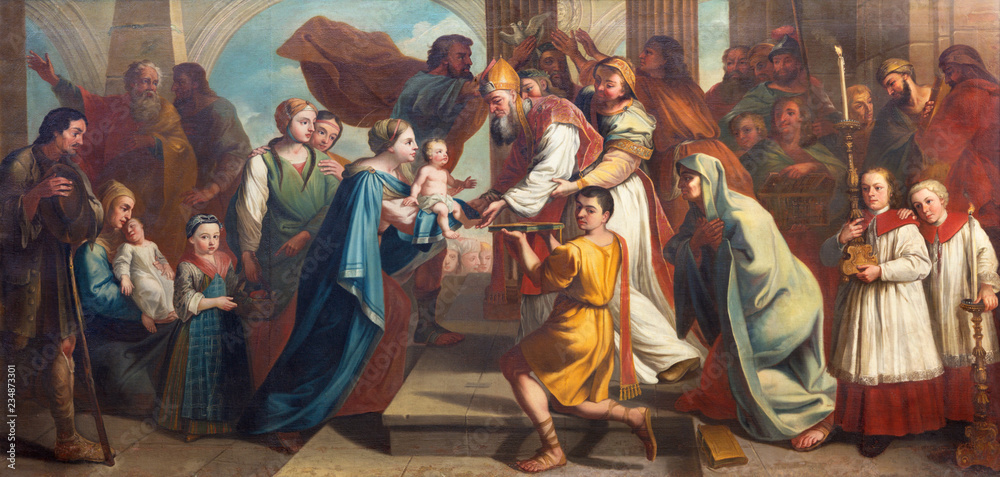
A Baroque oil painting depicting the Presentation of the infant Jesus to Simeon in the Temple, created by an unknown 18th century artist in Prague’s Church of St Gall
September 19, 2025
The Joyful and Luminous Mysteries - Day 262
AI-Generated Summary: On Certain Rosary Mysteries
We are told of a boy, not yet a man, who was found in His Father’s house, speaking with the teachers and answering their questions. This is the fifth Joyful Mystery, the Finding in the Temple, which speaks to a truth we all, in our quieter moments, know: that the soul finds its true home not where it is coddled, but where it is challenged and where it may seek the source of all wisdom.
Then comes the light, breaking upon the world in a new way. The first Luminous Mystery shows us the Man at the river Jordan, baptized by His cousin, and the heavens themselves torn open to declare a beloved Son. It is the beginning of a public work, a quiet inauguration that thunders through the ages.
The second mystery of light takes us to a wedding feast in a small town, where the wine—that simple, gladdening drink of fellowship—runs short. At a mother’s gentle plea, water is turned to wine, not merely to save a family’s honour, but as a first sign; a quiet, joyful revelation of the glory that has come to dwell among us, turning the ordinary into the extraordinary.
A young Jesus astonishes Temple scholars with divine wisdom in this depiction of the fifth Joyful Mystery (Stock Image)
Alexander Ivanov’s ‘Apparition of the Messiah’ (1837-1857) depicts John the Baptist revealing Christ’s approach at the Jordan River, capturing the first Luminous Mystery
Gerard David’s ‘The Marriage at Cana’ (c 1500, oil on wood, Louvre) depicts Christ’s first miracle of turning water into wine
September 20, 2025
The Luminous Mysteries - Day 263
AI-Generated Summary: On the Concluding Mysteries
We are invited to consider the final three rays of light that proceed from the life of Our Lord, those mysteries which illuminate the path from proclamation to transfiguration, and thence to the most sacred of gifts. The third of these luminous mysteries calls to mind the Proclamation of the Kingdom, wherein the Master began His great work, bidding all men to a turning of the heart, a metanoia, that they might be ready to receive a kingship not of this world.
Then follows that great and terrible wonder, the fourth mystery: the Transfiguration. Here, upon the high place, the veil of His mortal frame was drawn back for a moment, and the glory that was always within shone forth before His chosen three, a foretaste of the glory that is to be revealed in us.
And so we come to the fifth and final light, the very source and summit: the Institution of the Eucharist. In the upper room, on the eve of His passion, He performed the ultimate alchemy, making of common bread His very Body, and of common wine His very Blood, a perpetual testament and sustenance for His children until the end of days.
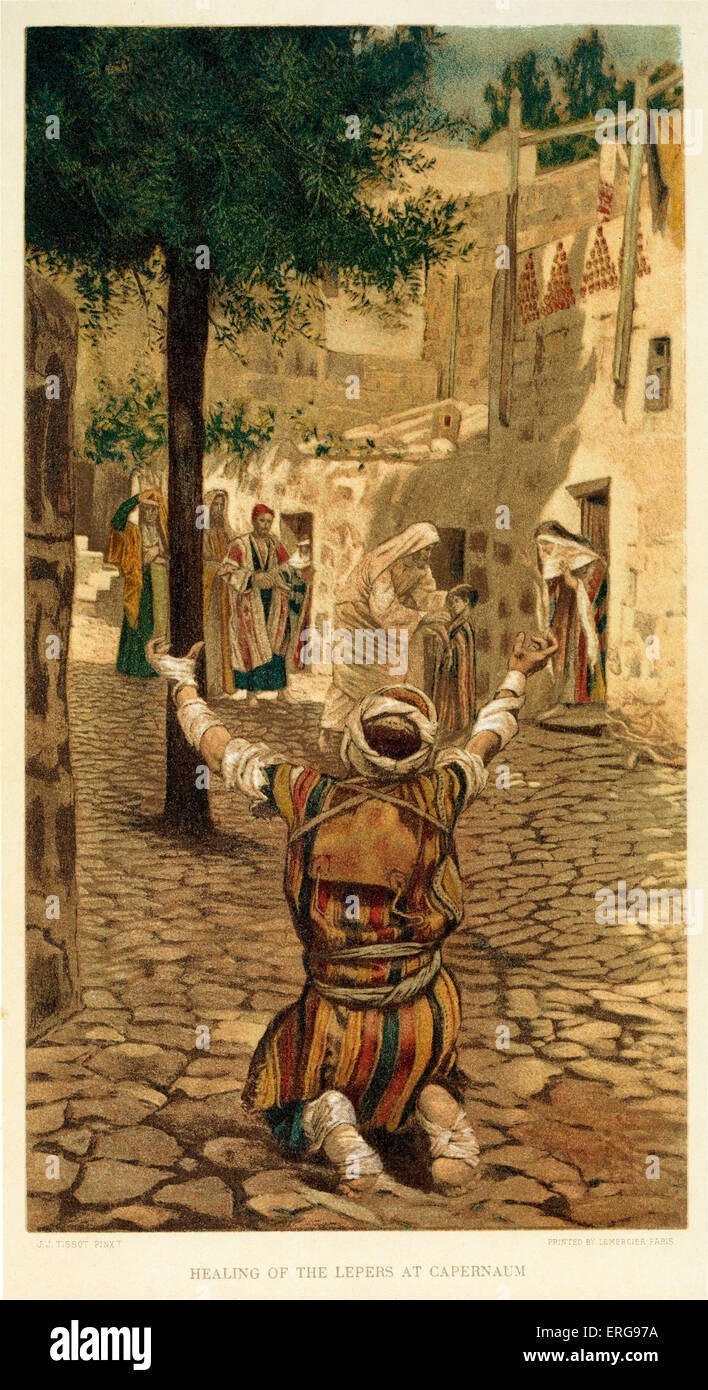
James Tissot’s 1894 gouache ‘Healing of the Lepers at Capernaum’ depicts Christ proclaiming God’s kingdom through miraculous healing (Stock Image)
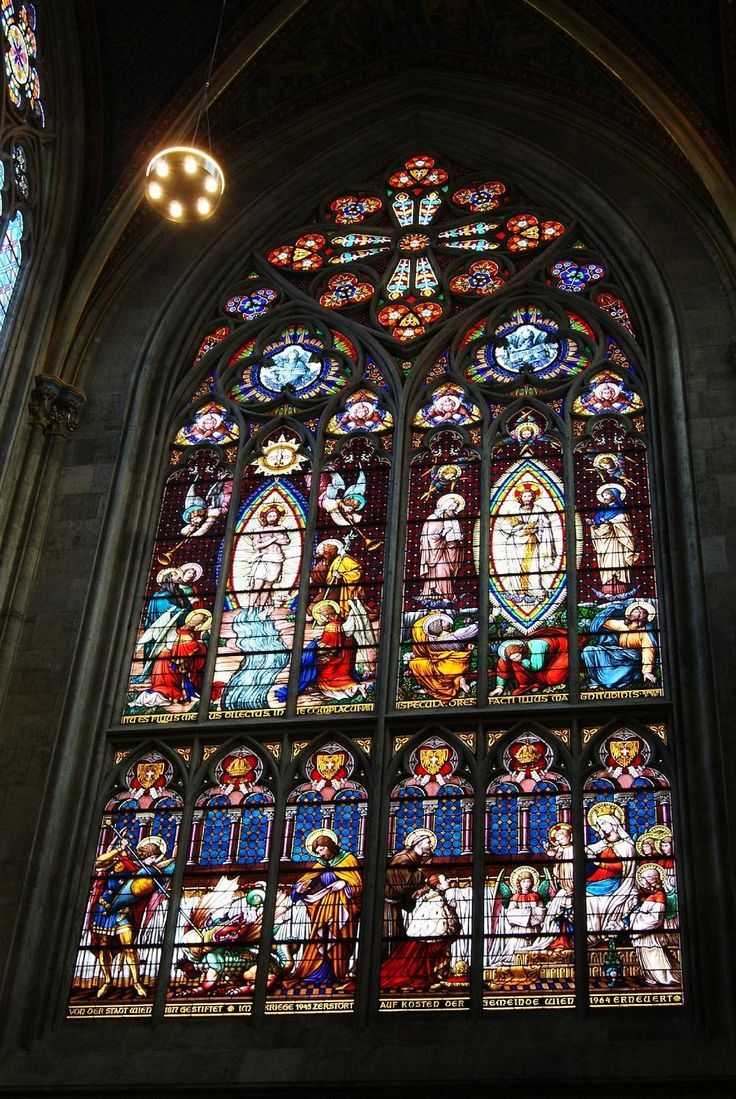
The Transfiguration’ in Vienna’s Votive Church depicts Christ radiant in divine light before His disciples, Moses, and Elijah
Tanner’s ‘Christ and the Disciples Before the Last Supper’ (c 1900, oil on canvas) depicts Christ’s spiritual preparation before instituting the Eucharist
September 21, 2025
The Sorrowful Mysteries - Day 264
AI-Generated Summary: The Sorrowful Mysteries
We are invited to contemplate the profound and terrible weight of the Sorrowful Mysteries. The first finds a Man, wholly God, in a garden, bowed not by the weight of sin but by the full knowledge of it, accepting the bitter cup of a will not His own. From this agony of spirit, we are led to the second mystery: the Scourging. Here, the Love that spoke worlds into being submits to the cruelty of His creatures, His flesh torn by the whip, a physical torment endured for a healing we could not ourselves achieve.
The third mystery presents a darker mockery still. The soldiers, in their coarse humour, fashion a crown from thorns and press it upon His head. They clothe Him in purple, a king’s colour, and offer a reed for a sceptre, thus making a ghastly pantomime of His true kingship. In this crowning, we see not only the infliction of a new and exquisite pain, but the world’s jeering rejection of the very principle of Glory it so desperately needs.
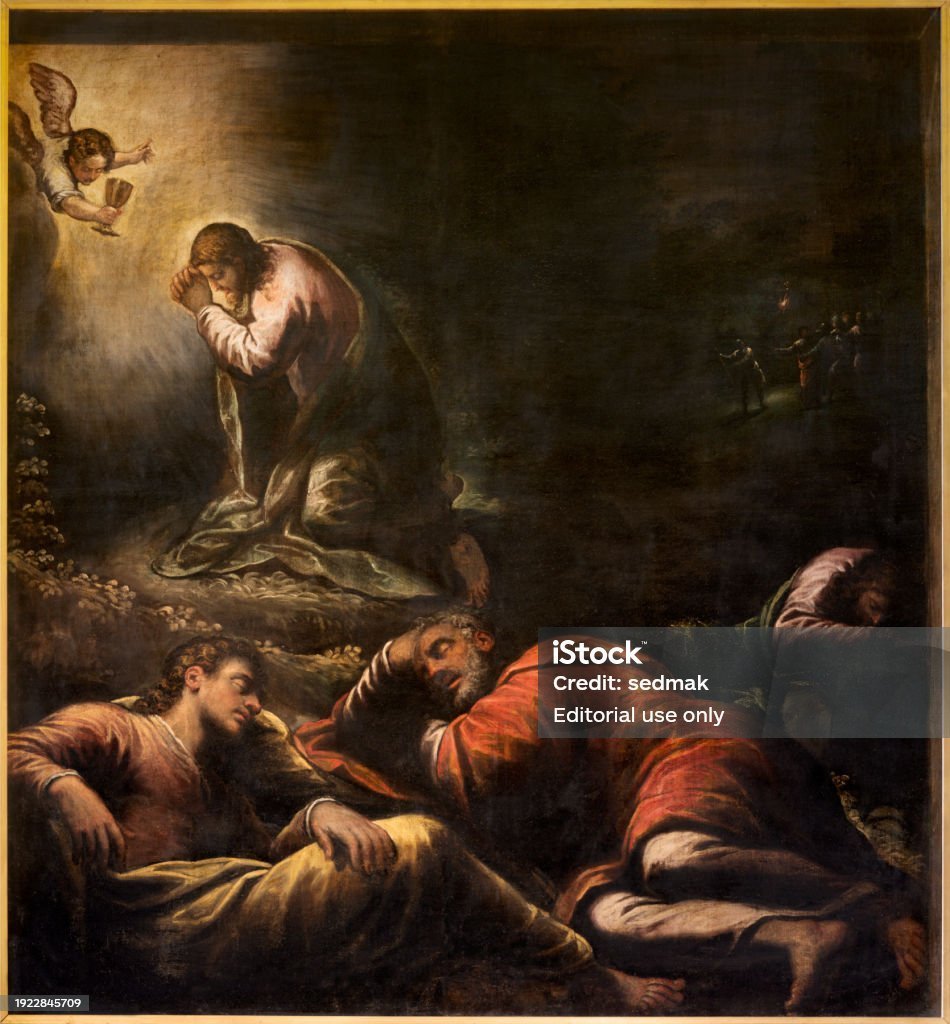
Alessandro Maganza’s c 1590-1610 ‘The Prayer of Jesus in Gethsemane’ depicts Christ’s spiritual agony as His disciples sleep nearby (Stock Image)
Bouguereau’s 1880 oil painting ‘The Flagellation of Our Lord Jesus Christ’ depicts Christ’s brutal scourging with divine resignation
Titian’s ‘Christ Crowned with Thorns’ (c 1542–1543) depicts Roman soldiers violently pressing the thorn crown onto Christ’s head as he endures with serene dignity
September 22, 2025
The Sorrowful and Glorious Mysteries - Day 265
AI-Generated Summary: The Weight and the Glory
We find ourselves, dear reader, at the very crux of the matter, where the long road of sorrow turns at last toward the uncreated light. The meditation begins with that terrible, glorious burden—the Carrying of the Cross. Here we see the Divine, in the person of Christ, taking the full weight of that rough timber and of a world’s sin upon His shoulders, a picture of every small and great suffering we are asked to bear.
From this we move to the fifth and final sorrow: the Crucifixion itself. This is the great contradiction, the moment where Life Himself submits to death, where the King is enthroned upon a cross. It is not a morbid fixation, but a solemn contemplation of the price paid, the ultimate act of love that purchased humanity’s redemption.
And then, as if a door had been flung open in a silent house, the meditation turns at once to the first Glorious Mystery: the Resurrection. This is the great rebuttal to despair, the event that shatters the finality of the tomb. It is the third day, the new dawn, the vindication of every hope and the promise that death itself is but a sleep from which we shall all awake.
The prayers themselves—the repeated Ave Marias, the Paternoster, the Gloria—are not incantations but the steady rhythm of the heart turning these things over, much as one turns a precious stone in the hand to see it catch the light from different angles. They are the humble means by which the soul attends to the reality behind the mystery. The text provides the simple, faithful structure for this attendance, a path walked in prayerful repetition toward a truth that is never repetitive, but ever new.
Raphael’s ‘Christ Falls on the Way to Calvary’ (1516-1517) depicts Christ stumbling under the cross’s weight on the Via Dolorosa, with Mary and witnesses present
James Tissot’s 1886-94 ‘What Our Lord Saw from the Cross’ depicts the Crucifixion from Christ’s perspective, showing the crowd below in gouache on paper, housed at the Brooklyn Museum
Annibale Carracci’s ‘Resurrection’ (1593, oil on canvas, Louvre) depicts Jesus Christ’s glorious emergence from the tomb as Roman soldiers recoil in awe
September 23, 2025
The Glorious Mysteries - Day 266
AI-Generated Summary: The Glorious Mysteries
One finds in these fragments a glimpse of the great turning points, the hinges upon which the door of our salvation swings open. We are told of the second mystery, where the Lord, His work accomplished, ascended to prepare a place, leaving the disciples not as orphans but with a promise. Then comes the third, the rushing wind and tongues of fire at Pentecost, where the Comforter Himself descended to give courage to timid hearts and a common tongue to a scattered people.
The fourth mystery speaks of a singular grace, the Assumption of the Blessed Virgin, who was taken up, body and soul, into the glory that awaits all who are in her Son. This is the final mystery named, a sure and certain hope of the destiny prepared for our human nature, now glorified in her as the first fruits of the Resurrection. As for the rest, the text is a tapestry woven chiefly from the familiar and hallowed prayers of the faithful, the very repetition of which is a kind of answer in itself.
Bernardino Gandino’s ‘Ascension of the Lord’ depicts the risen Christ ascending into heaven as the apostles watch in awe (Stock Image)
Titian’s 1546 ‘Pentecost’ in Venice depicts the Holy Spirit descending as fire upon Mary and the apostles
A 13th-15th century Gothic stained glass window in Burgos Cathedral depicting ‘The Assumption of Mary’, body and soul into heaven (Stock Image)
September 24, 2025
The Glorious and Joyful Mysteries - Day 267
AI-Generated Summary: On the Mysteries of the Rosary
You will find, as so often in these matters, that the thing itself is not a complex argument but a simple, repeated action—like a path worn smooth by the feet of many travellers. The text presents not a discourse on the Glorious and Joyful Mysteries, but the very recitation of the prayers themselves: the Our Father, the Hail Mary, the Glory Be. It is the doing of the thing that is the point.
The mysteries are named, as one might name landmarks on a well-known journey. The fifth Glorious Mystery is the Coronation of our Lady as Queen of Heaven, a final truth about the nature of a creature so perfectly obedient that her destiny is a crown. Then the path turns back to the beginning, to the first Joyful Mysteries. The Annunciation, where a young woman’s consent changes the course of the world, and the Visitation, where that hidden truth is recognised by another, and joy leaps in the womb.
There is a sense in which the repetition is the meaning. One does not analyse the steps while walking the path; one simply walks, and in the walking, the heart is shaped to the contours of the story. The text contains no pictures or descriptions of art, for the prayer is the making of the ikon within the soul. The mysteries are not explained, but encountered, decade by decade, as a man might return to a familiar room to find, each time, that the light from the window has changed.
Velázquez’s ‘Coronation of the Virgin’ (c 1641-1644) depicts the Holy Trinity crowning Mary as Queen of Heaven in a Baroque oil painting at the Prado
Fra Angelico’s ‘The Annunciation’ (mid-1430s) depicts Gabriel’s announcement to Mary in tempera on panel, housed in the Museo del Prado
‘The Visitation’ depicts Mary and Elizabeth’s joyful meeting, their mutual recognition of God’s work as they embrace, both pregnant with Jesus and John the Baptist
September 25, 2025
The Joyful Mysteries - Day 268
AI-Generated Summary: On the Joyful Mysteries
You will find, as many have before you, that the Joyful Mysteries are not merely a recitation of distant events, but a path trod into the very heart of a great story. The third is the Nativity itself, the humble and glorious arrival of the King in a stable. The fourth is the Presentation, where the infant Lord is brought to the Temple in accordance with the ancient Law. And the fifth, which seems to hold a particular lesson for parents and children alike, is the Finding in the Temple. This is the account of the boy Jesus, at twelve years of age, remaining behind in Jerusalem. After a search of three days, his parents found him not at play, but sitting among the teachers in the Temple, hearing them and asking questions, and all who heard him were astonished at his understanding.
The text itself is composed of the familiar and comforting rhythms of the Rosary prayers—the Our Father, the many Hail Marys, the Gloria. It is a tapestry woven not with new words, but with the old, good words repeated until they sink past the mind and into the heart. There is also mention of a new book, an interactive guide for little ones, designed with flaps and wheels to lead a child’s hand and heart into this same prayer. It contains all the necessary prayers and is filled with pictures, for a child, like the rest of us, must first be drawn in by a kind of beauty.
Pellegrini’s 18th-century Rococo ‘The Nativity’ in Vienna depicts the newborn Christ adored by Mary, Joseph, and angels (Stock Image)
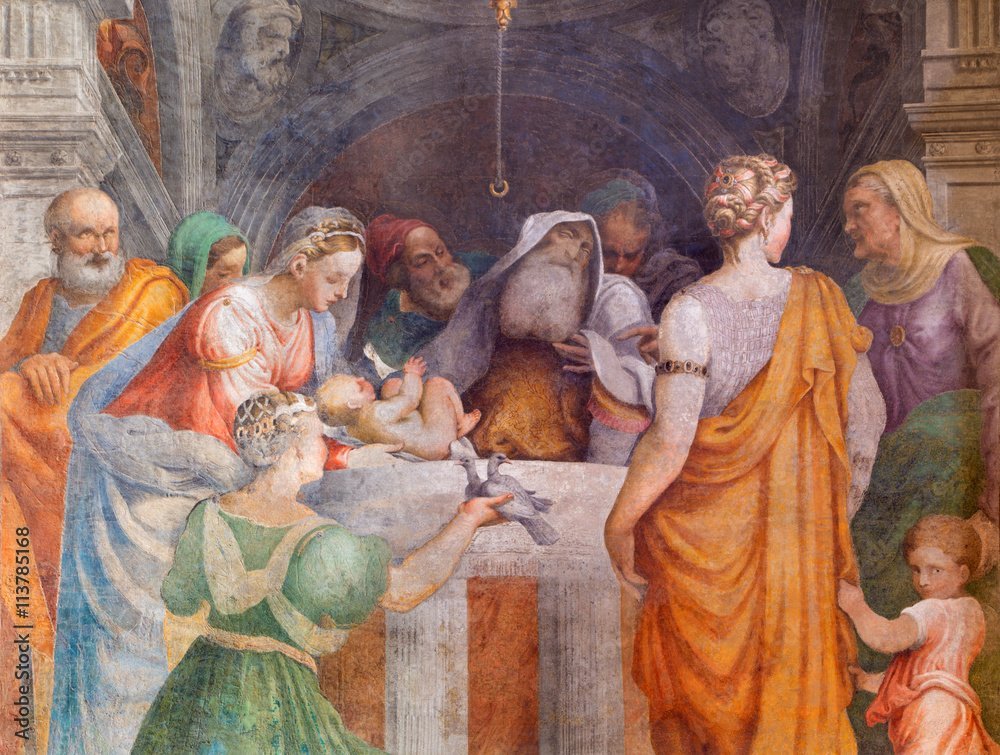
Giulio Campi’s 1547 fresco ‘The Presentation of Jesus in the Temple’ in Cremona depicts Mary and Joseph presenting the infant Christ to Simeon (Stock Image)
A young Jesus astonishes the Temple scholars with his divine wisdom in this depiction of ‘The Finding of Jesus in the Temple’ (Stock Image)
September 26, 2025
The Luminous Mysteries - Day 269
AI-Generated Summary: On the First Three Mysteries
It is a curious thing that the most profound truths are often revealed not in the clamour of great events, but in the quiet, ordinary moments which are, upon reflection, shot through with the extraordinary. So it is with these first Luminous Mysteries, which are like windows suddenly cleaned, allowing a new and startling light to pour into the world.
The first, the Baptism in the Jordan, presents us with a picture of perfect humility. Here is the King, submitting to a servant’s rite, not because He had any stain to wash away, but to sanctify the very waters for our sake. And in that act of condescension, the heavens themselves are torn open; the voice of the Father speaks, and the Spirit, in the form of a dove, descends. The great secret of the Trinity, which had been whispered in shadows since the world began, is now declared plainly for all to see.
Then comes the mystery of the Wedding at Cana. One might think a village feast a strange place for a king to first show his hand, yet it is precisely there, at the gentle insistence of His Mother, that He acts. The water, a plain and common thing, is changed into the best wine. It is a sign, of course, a little miracle of transformation that points to a greater one—the changing of our own watery, insipid lives into something rich and joyful by His command.
The third mystery is the Proclamation of the Kingdom. This is no mere announcement of a new law or a distant country. It is a call, a summons that echoes through the marketplace and the quiet heart alike: “The time is fulfilled. You must turn around, you must change your mind and your direction, for the Kingdom is now among you.” It is an invitation to a reality that has been breaking in upon us all along, if only we have the eyes to see.
Ivanov’s ‘Apparition of the Messiah’ (1837-1857) depicts John the Baptist revealing Christ to a diverse crowd, a monumental Russian Romantic oil painting in Moscow’s Tretyakov Gallery
Gerard David’s c 1500 oil painting ‘The Marriage at Cana’ in the Louvre depicts Jesus performing his first miracle at a wedding feast
James Tissot’s 1894 gouache ‘Healing of the Lepers at Capernaum’ depicts Jesus proclaiming God’s kingdom through an act of compassionate healing (Stock Image)
September 27, 2025
The Luminous and Sorrowful Mysteries - Day 270
AI-Generated Summary: On the Mysteries of Light and Sorrow
You will have observed that the final steps along the way of Light lead us to a great height and then to a quiet room. The fourth of these Luminous Mysteries is the Transfiguration, where, upon the mountain, the Master’s face shone like the sun and his clothes became as light itself, and the Law and the Prophets, in the persons of Moses and Elijah, were seen conversing with him. This was a glimpse of the country we are made for, a sudden brightness breaking through the familiar human form.
From that peak, we are brought down to the fifth mystery, the Institution of the Holy Eucharist. Here, in the upper room, He performed the ultimate alchemy, taking the common stuff of bread and wine and making them the vehicle of His own life, a perpetual fountain of grace for His children. It is the gift that bridges the chasm between His departure and our present need.
And then, as if the very light is swallowed by a gathering shadow, we pass from the Mysteries of Light to the first of the Sorrowful Mysteries: the Agony in the Garden. Here we find no radiance, but a man alone in the darkness, pressed down by a weight He alone could bear, praying in such anguish that his sweat fell like drops of blood. It is the beginning of the great reversal, where the will of the Son is freely given over to the will of the Father, and the long road to the redemption of the world is trod.
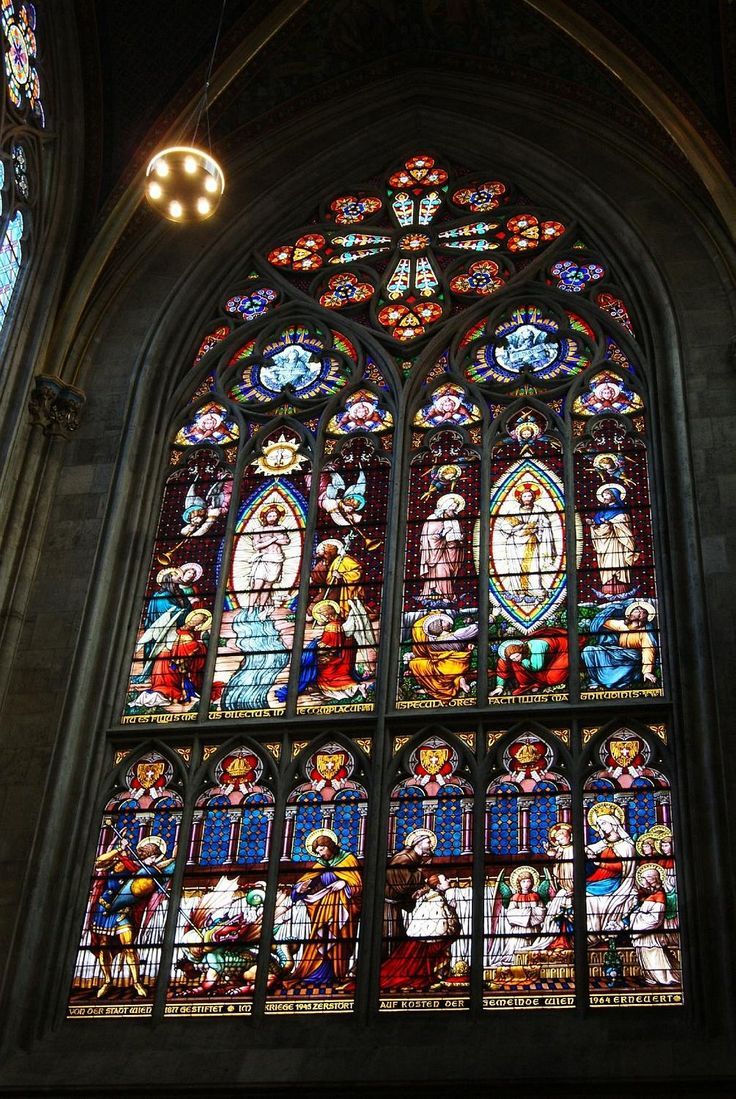
‘The Transfiguration’ depicts Jesus radiant in divine light before His disciples, with Moses and Elijah, in Vienna’s Votive Church
Henry Ossawa Tanner’s 1900 oil painting ‘Christ and the Disciples Before the Last Supper’ paints the spiritual preparation for the Institution of the Eucharist
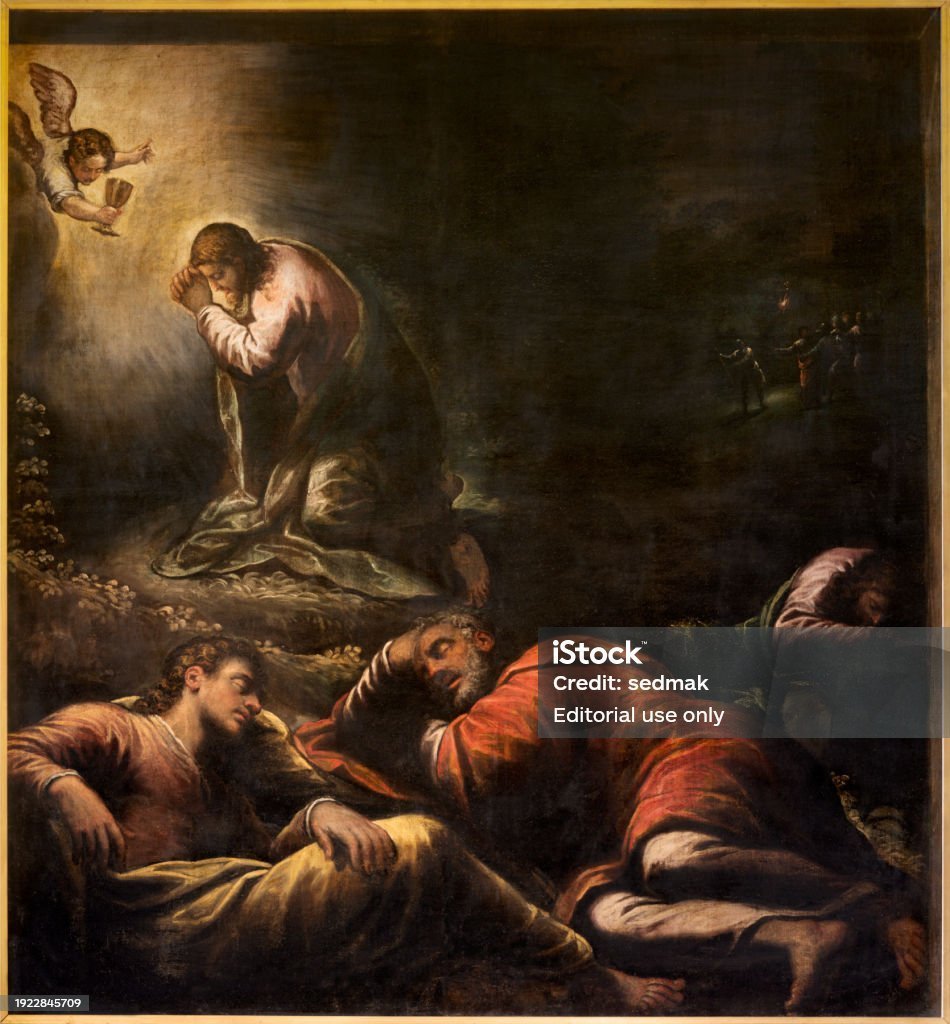
Alessandro Maganza’s ‘The Prayer of Jesus in Gethsemane’ (c 1590-1610) depicts Christ’s spiritual agony as his disciples sleep (Stock Image)
September 28, 2025
The Sorrowful Mysteries - Day 271
AI-Generated Summary: On the Sorrowful Mysteries
One finds in these fragments a path trod with solemn steps, a meditation on that great and terrible turning point which we call the Sorrowful Mysteries. The soul is led, as it were, to consider three particular stations along that dolorous way.
First, there is the Scourging at the Pillar, a contemplation of the Word made flesh subjected to the lash, bound to that cold stone not for His own transgressions, but for ours. Then follows the Crowning with Thorns, a bitter parody of kingship where cruelty masquerades as homage, pressing a crown not of gold but of piercing bramble upon the brow of the true King. And lastly, the Carrying of the Cross, that arduous journey to Calvary where the weight of the wood is but an outward sign of the far heavier burden of a world’s sin borne upon His shoulders.
These are not mere events of history, you understand, but mysteries into which we are invited to enter, that we might find, hidden in their very heart of darkness, the seeds of a brighter dawn.
Caravaggio’s 1607 Baroque masterpiece ‘The Flagellation of Christ,’ in Naples, depicts Christ’s brutal scourging at the pillar

Van Dyck’s 1620 Baroque painting ‘The Crowning with Thorns’ depicts Roman soldiers mockingly pressing a thorny crown upon Christ’s head
Pieter Bruegel the Elder’s 1564 oil painting ‘The Procession to Calvary’ depicts Christ’s solitary suffering amidst an indifferent crowd
September 29, 2025
The Sorrowful and Glorious Mysteries - Day 272
AI-Generated Summary: On Sorrows and Glories
My dear reader, one finds in these mysteries a pattern as old as the world itself—that the deepest sorrow must ever give way to a greater glory. First comes the fifth sorrowful mystery, the Crucifixion, where the King is nailed to the wood and completes His work at Calvary. It is the final, terrible price.
But see how the story does not end there. For the first glorious mystery is the Resurrection, where on the third day He rises, shattering the very chains of death. And then, as a man might return home after a long campaign, the second glorious mystery shows us the Ascension. Forty days after His rising, He ascends bodily into heaven, leaving His apostles not as orphans, but as witnesses to a promise fulfilled. This is the true order of things: from the darkest Friday dawns the brightest Sunday, and from the dust of this world, we are shown the path to the next.
Pietro Gagliardi’s 1847-1852 fresco ‘Crucifixion’ in San Girolamo dei Croati depicts Christ’s sacrifice with the Virgin Mary, John, and Mary Magdalene (Stock Image)
Annibale Carracci’s 1593 Baroque masterpiece ‘Resurrection’ depicts Christ triumphantly emerging from the tomb as Roman soldiers recoil in awe
Bernardino Gandino’s ‘Ascension of the Lord’ depicts Christ ascending into heaven as the apostles watch in wonder (Stock Image)
September 30, 2025
The Glorious Mysteries - Day 273
AI-Generated Summary: On the Ineffable and the Practical
My dear reader, one finds in such texts a curious division—like two different countries on the same map. On one hand, there is the recitation of holy things: the Glorious Mysteries of the Assumption and Coronation, the descent of the Spirit. These are the high roads of the spirit, the great truths we are invited to contemplate. Yet the text itself, the very parchment before us, contains not the contemplation but only the signposts—the names of the mysteries without their substance, the repeated prayers without the accompanying silence of the heart.
It is as if one were given the title of a great book but not its chapters, or the name of a celestial city but no description of its streets. We are told of the Assumption of Mary, that she was taken up, body and soul; we are told of her Coronation as Queen. These are not small things. They speak of the destiny for which humanity was made, a promise written into the very fabric of a creation that will one day be glorified, not discarded.
Yet here, the substance is withheld. We are left with the scaffolding of devotion—the Hail Marys, the Our Fathers—which are, of course, the necessary tools for the work. But the work itself, the interior castle we mean to build with them, is not described. It is a reminder that the map is not the territory, and the prayer is not the encounter, though it is the means by which we hope to arrive there. We are given the method, but the vision—the artwork of the soul that these mysteries would paint upon it—remains, in this instance, unseen.
Cesare Mariani’s 1863 fresco ‘Assumption of the Virgin with Vision of St Bonaventure’ in Rome depicts Mary’s bodily ascent into heaven
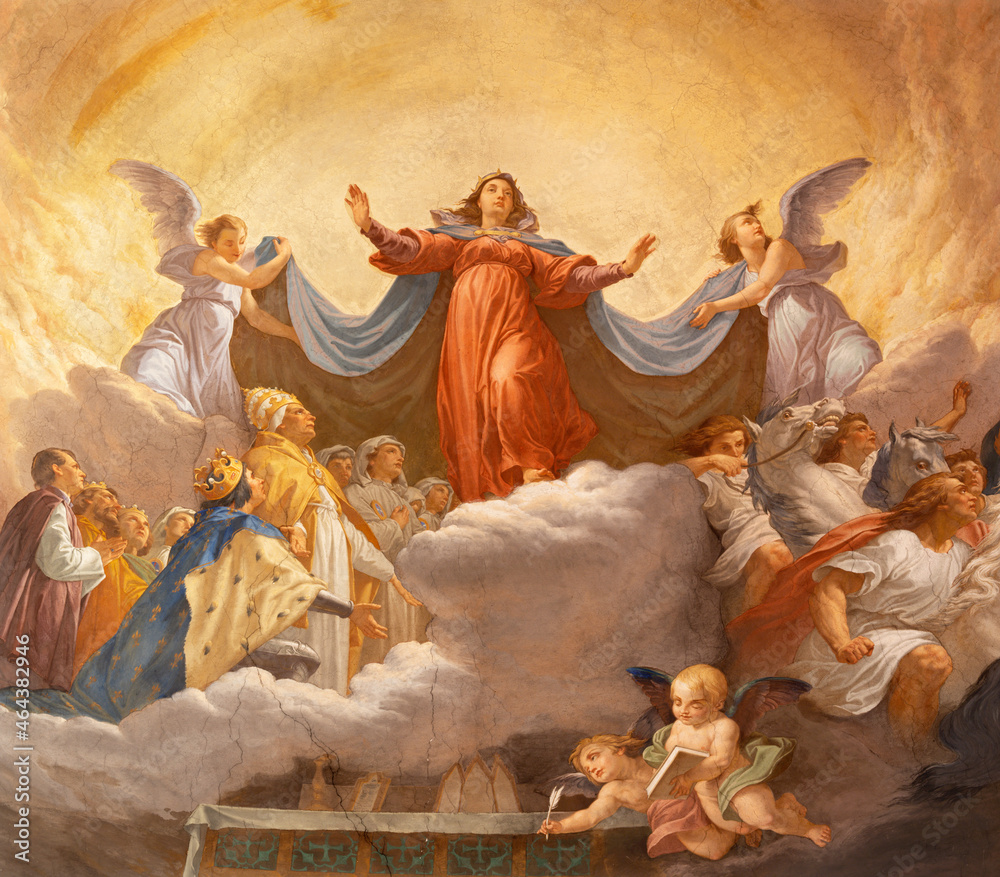
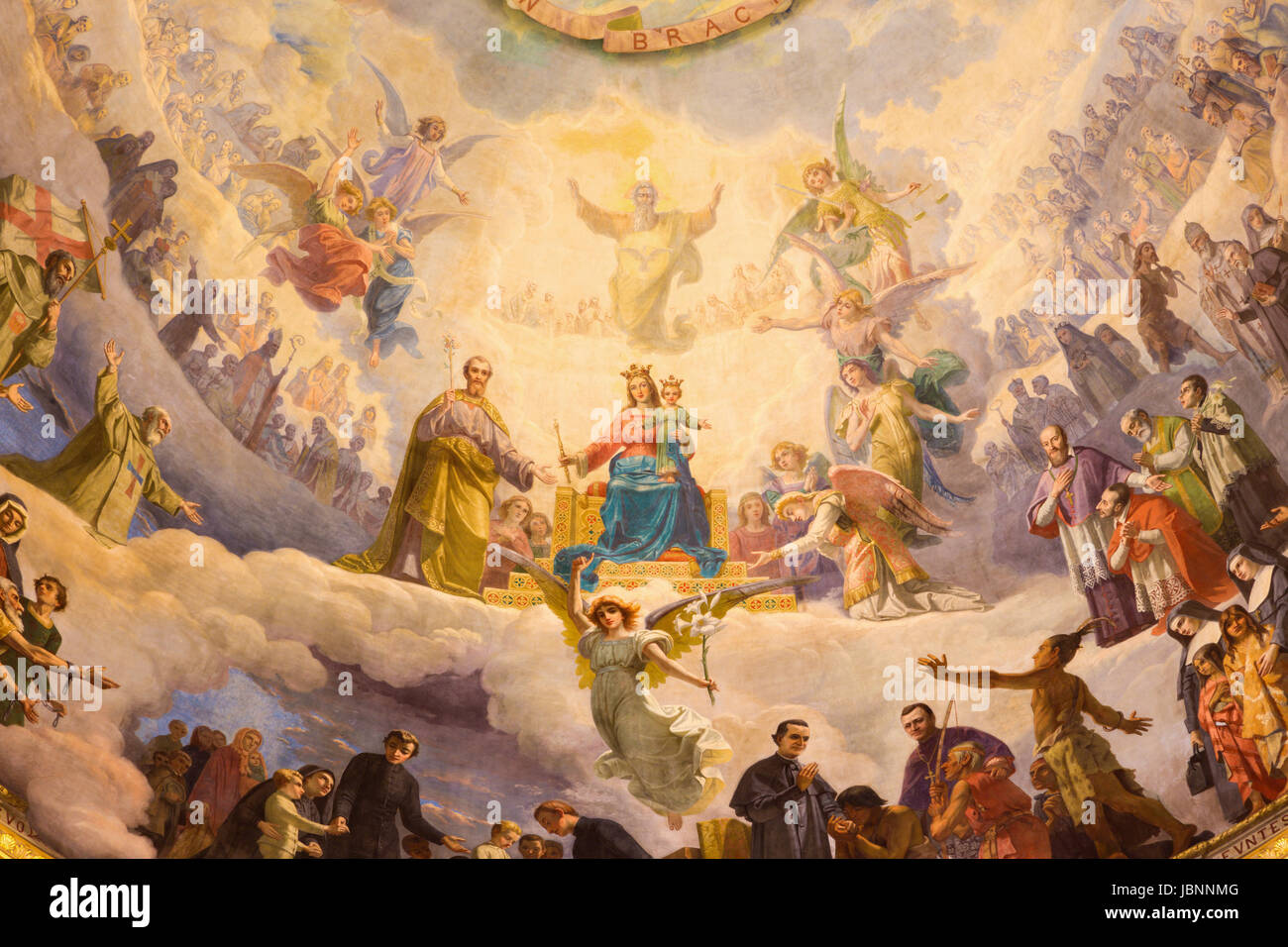
Giuseppe Rollini’s 19th-century fresco in Turin, ‘Mary, Help of Christians’, depicts the Virgin’s coronation and intercessory role (Stock Image)
Simone Peterzano’s 1580 Mannerist ‘Pentecost’ in Milan depicts the Holy Spirit descending as fire upon Mary and the apostles (Stock Image)