January 2025
RIAY January 2025
January 01,2025
Responding to God
ROSARY IN A YEAR DAY 01 Michelle Jackson
Thank God for this blessing, i love the intro when the evil one accuses us he leaves us hopeless and helpless but when the HolySpirit convicts us of our sin He always leads us to Hope. What we believe in should change us Prayer doesn’t help our relationship with God, prayer “is” our relationship with God Our body and soul should connect when we pray Most importantly it’s raising our heart and mind to God by making an act of Faith by which we look at Him who is “always” looking at us, listening to us and loving us*😢 We need to practice His presence by recognising His presence, He’s always there.* We need to give our all when we pray it’s not one sided it’s a relationship, we need to listen after we speak. Thank you Lord for this relationship you give us through prayer🙏
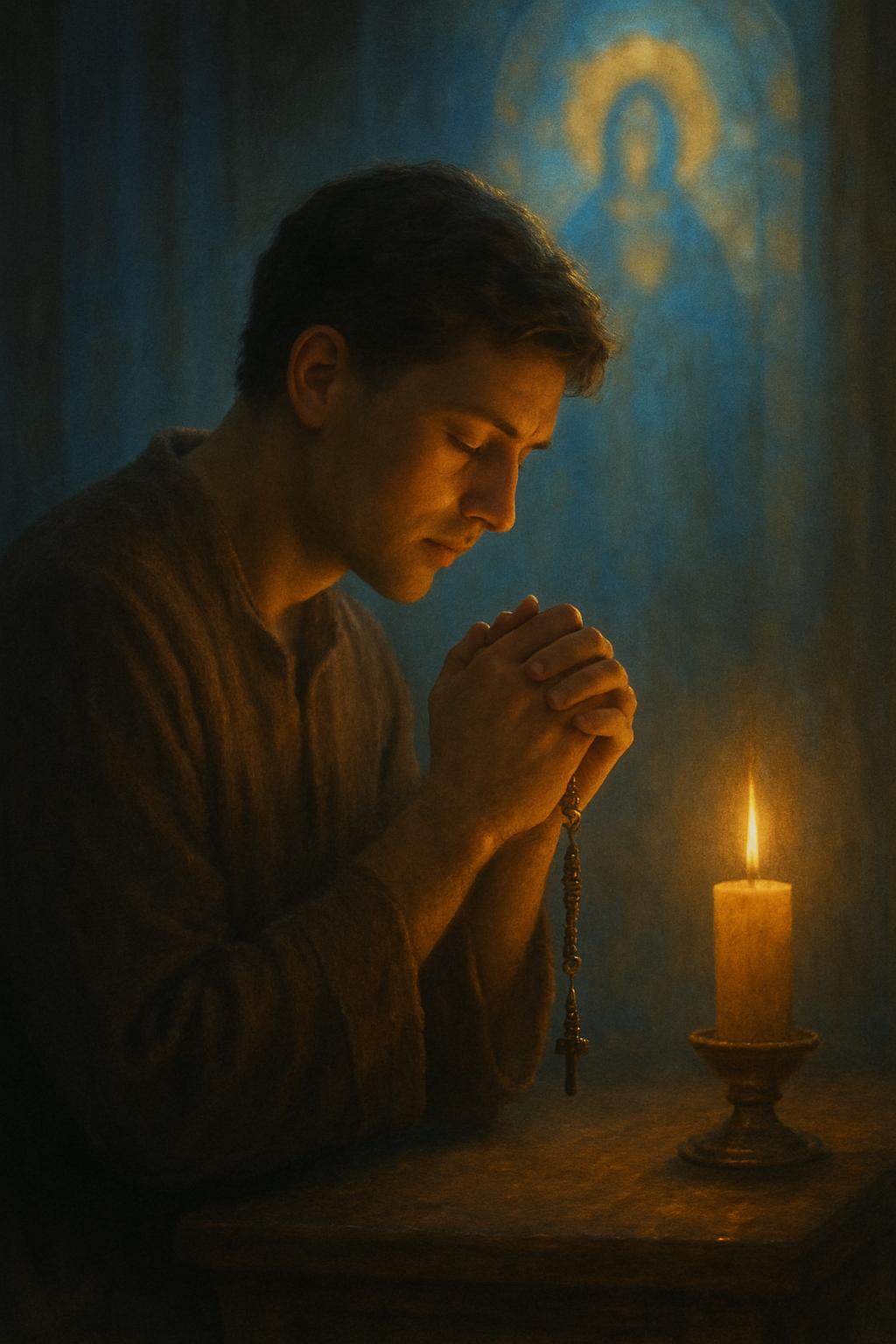
AI-Generated Summary: The Sacred Dance of Prayer
To pray is not merely to speak, but to listen; not to perform, but to surrender. Begin as you would with a dear friend—by quieting the restless mind and acknowledging the One who is already near. Let your first act be stillness: a breath, a glance upon sacred art, a whispered verse. For God does not wait beyond some distant gate; He is here, and to raise the heart to Him is but to wake to what is ever true.
Consider the Rosary not as a task to be completed, but as a path to be walked, step by step. Begin with a single decade, as a child learns to walk before he runs. Let each bead be a meeting place where love is given and received. In time, what once felt halting—like the first uncertain steps of a dance—will become a rhythm of grace.
Prayer is, at its heart, an act of faith: to offer up our tangled hopes and hidden fears, and in return, to receive the peace that the world cannot give. Do not be troubled if it feels strange at first. Even the saints began as beginners. Persist, and you will find what all the saints have known—that in the quiet surrender of prayer, the soul is met, held, and transformed by Love Himself.
And so we lift our hearts, not alone, but as children of Mary, who teaches us to say with her, “Be it done unto me according to Thy word.” For in the end, prayer is not our work, but His—a gift already given, waiting only to be unwrapped.
AI-Generated Image: A sacred dance of prayer, where stillness meets surrender and grace unfolds like a whispered verse
January 02,2025
The King Knows You
ROSARY IN A YEAR DAY 02 Michelle Jackson
The King knows “you/me” This is so personal for me _The king of the universe knows me even before i was knit in my mother’s womb,* He knows the very number of hairs on my head, how precious and heart striking it is to know that. The King sees me, the King Knows me, the King “Loves” to hear my voice ❤🔥 and the King knows my name 😍😍 My God My God how I love Thee. This way of praying having the image of Him in our hearts when we pray is something so precious, we see ourselves and feel so unworthy while all along He looks at us in Love. Thank you Jesus. i once asked Jesus while at a retreat to call to my name aloud and He did while it was on the last day of the retreat we were all having a JAM dance (Jesus and me) in the midst of all the music and loud noise I heard someone call my name it was clear and soft I asked my husband if he called my name and he said no and I knew it at once it was Jesus who called my name. So yes ,The King knows me/ the King knows you/ the King knows each of us by name 😇😢❤🔥
Day 2 - Michael Eltham
A good pairing to today’s episode “The King knows you” would be to read and ponder on Psalm 139.
LORD, you have probed me, you know me: you know when I sit and stand; you understand my thoughts from afar.
You sift through my travels and my rest; with all my ways you are familiar.
Even before a word is on my tongue, LORD, you know it all.
Behind and before you encircle me and rest your hand upon me.
Such knowledge is too wonderful for me, far too lofty for me to reach.
Where can I go from your spirit? From your presence, where can I flee?
If I ascend to the heavens, you are there; if I lie down in Sheol, there you are. If I take the wings of dawn and dwell beyond the sea,
Even there your hand guides me, your right hand holds me fast.
If I say, “Surely darkness shall hide me, and night shall be my light”
Darkness is not dark for you, and night shines as the day. Darkness and light are but one.d
You formed my inmost being; you knit me in my mother’s womb.
I praise you, because I am wonderfully made; wonderful are your works!
My very self you know. My bones are not hidden from you,
When I was being made in secret, fashioned in the depths of the earth.
Your eyes saw me unformed; in your book all are written down; my days were shaped, before one came to be.
It is good to simply be held by our Father, to rest in His bosom. Knowing that He is always watching over us and we are precious to Him.
May the Holy Spirit lead us.
AI-Generated Summary: Encountering the King in Prayer
This section explores the profound experience of encountering Jesus in prayer, particularly through the lens of the Litany of the Sacred Heart. The speaker initially expresses a past aversion to litanies due to a lack of comprehension regarding the titles attributed to Jesus. However, recent study and contemplation have unveiled the depth and poetic beauty within these titles, leading to a newfound appreciation. A litany, as defined in the segment, is a vocal prayer with a specific focus, incorporating invocations that highlight the titles and attributes of the divine mystery being addressed.
The core of this reflection centers on the invocation “Heart of Jesus, King and Center of All Hearts.” The speaker encourages listeners to visualize Christ the King upon his throne, surrounded by angelic hosts, radiating majesty, and holding the world in his hand. He is depicted as omnipotent, the ultimate lawgiver, ruler, and victor. Crucially, and perhaps most importantly, this King knows each individual by name.
To illustrate this point, the speaker recounts a personal anecdote about collaborating with Father Mike Schmitz on video projects for an extended period, despite being geographically separated and having limited direct interaction. The speaker was deeply moved when Father Mike addressed them by name, demonstrating a personal connection despite the lack of close contact. This anecdote serves as a powerful analogy, highlighting that even though Father Mike is a recognizable figure in Catholic media, he is not the literal King of the Universe, unlike Jesus.
This leads to the central theme: Jesus, the Eternal King, possesses an intimate knowledge of each person. He knows our names, formed us in the womb, and even knows the number of hairs on our heads. The speaker emphasizes the importance of envisioning oneself in the King’s throne room during prayer, recognizing that He yearns for our presence and focuses intently on us. However, we often allow distractions to our attention – worries, anxieties, our phones, or the lives of others. This is compared to the biblical account of Martha, who busied herself with many things, while Mary chose the better part by sitting at Jesus’ feet.
The speaker urges listeners to emulate Mary and choose the better part. This involves approaching the King on his throne, engaging in direct eye contact, and making him the center of our attention. It necessitates recognizing that He sees and knows us completely. We are encouraged to hear Him speak our name, to be attuned to the stirrings within our hearts, and to respond authentically. Sharing our love, needs, and desires with Him is vital because Jesus cherishes the sound of our voices. The message is clear: speak to Him. Maintain Him as the focal point of our hearts, attention, and lives as we pray the Our Father, three Hail Marys, and the Glory Be. The key takeaway is the constant reassurance that the King sees us, knows us, loves to hear our voice, and knows our name.
The segment then transitions into the recitation of the prayers mentioned: the concluding portion of the Lord’s Prayer (“Forgive us our trespasses, as we forgive those who trespass against us; and lead us not into temptation, but deliver us from evil. Amen”), followed by three Hail Marys and the Glory Be. The inclusion of these prayers within the segment reinforces the message of actively engaging with Jesus in prayer. The session concludes with a brief expression of gratitude and a farewell.
Notable insights from this segment include the reframing of litanies as poetic expressions of devotion, the powerful analogy of Father Mike Schmitz recognizing the speaker by name, and the emphasis on Jesus’ intimate knowledge of each individual. The central message is a call to prioritize our relationship with Jesus, making Him the center of our hearts and lives, and engaging in authentic communication with Him through prayer. The visualization of being present in the King’s throne room serves as a powerful tool for fostering this connection and deepening our understanding of His love and attention. The concluding prayers offer a practical application of this message, encouraging listeners to put these principles into practice.
January 03,2025
Heart of Jesus
RIAY Day 3 Heart of Jesus Michael Eltham
Working in corporate America often feels like being caught in a relentless race—striving to be the best, fastest, most accurate, and efficient. The pressure to complete tasks quickly and be the first to market can overshadow the joy and love for the work itself. However, today’s episode of Jesus in St. Joseph’s Workshop was a profound reminder: Jesus has been with me all along, accompanying me in every moment of my work life.
He sees me in my failures, encourages me when I feel like giving up, rejoices in my successes, and prays for me in moments of complacency.
Let us invite Jesus and St. Joseph into our daily work. With their presence, the labor of our hands will be blessed, and even the most mundane tasks will regain their purpose and meaning.
May the Holy Spirit lead us.
RIAY Day 3 - Marcy
So grateful for the RIAY. Being in the workshop with Jesus as my teacher today was just awesome 👌. I was not anxious, nervous or afraid but was excited that now I am really going to get it right. I am not in a hurry, I will be patient, I will do my best to listen and follow the instructions, even when a heavy tool falls on my toe or if I miss the target and bash my fingers 😉, I will dance to the pain till it cools off and will continue trying till I get it right. 🙏
Rosary IN A YEAR DAY 03- Heart of Jesus Michelle Jackson
Jesus who are You? Jesus, What is Your heart like? Jesus, what is Your heart like to me? _Jesus is my safe space, my home, my heaven, my best friend, my hope, my life, my saviour, my EVERYTHING. The very meaning of my life_❤🔥 Yes Jesus’ heart is full of Patience and Mercy I see myself like a child in His workshop and inspite of Him giving me instructions i keep interrupting Him and asking if i’m doing well and all i see is He smiles back at me , im in a hurry but He is not, He’s full of Love and I feel so safe and free to be myself that even though i’m messing up He’s not angry or upset. Im trying to keep up, looking at what He’s doing but i don’t seem to match n i cry , and just then He tells me His secret, that He loves spending time with me and loves it that i’m spending time with Him. And that’s what Mamma told Him, that we need to spend time together.😭❤🔥😢 It melts my heart hearing that, i drop the tools and jump onto Him and He embraces me. This picture within is so real the truth to it all - Jesus and i in His workshop,was not for what i came for but that i came to be with Him and He values that so much. Jesus values the time we give to Him even though we may not know now or feel it strongly, but we will know it once we enter into that personal relationship with Him ,which He waits for eagerly. Shalom.🙏🏽🏼
RIAY Day 3 - Gavril
“Mom wants us to spend time together more than she wants these new candlesticks. In fact, just us spending time together is the greatest gift we can give to her” This was the most beautiful line in the meditation😢
AI-Generated Summary: Finding Peace and Presence in Prayer
Father Mark Mary’s reflection centers on experiencing prayer as a personal encounter with Jesus, emphasizing his patient and merciful nature. He guides a meditative visualization of working alongside Jesus in Joseph’s workshop, crafting candlesticks for Mary. This exercise encourages listeners to reflect on their emotional response to Jesus’s presence, contrasting the stress of striving for perfection with the peace and freedom found in his acceptance.
Key takeaways include:
Prayer as Encounter: Prayer is not about perfect execution but about connecting with the living God, Jesus, who knows and loves each individual.
Jesus’s Patience and Mercy: Jesus is depicted as a patient and merciful teacher, understanding of our mistakes and valuing our time with him above all else. His gaze is always patient and merciful.
Embracing Imperfection: It’s okay to be imperfect in prayer. Distractions, mistakes, and even falling asleep are acceptable. What matters is praying with love and trust, like a beginner learning from a patient teacher.
Focusing on Presence: Imagining Jesus’s presence during prayer, especially the rosary, can deepen the experience and foster awareness of his love and understanding.
Notable insights include the analogy of learning in a woodshop with Jesus, highlighting his willingness to restart projects and provide new materials, emphasizing the importance of the relationship over the task. The speaker also addresses those uncomfortable with closeness to Jesus, encouraging honesty about their feelings. Finally, the emphasis on Mary valuing time spent with Jesus above all else underscores the relational aspect of prayer. The reflection concludes with a guided prayer incorporating the Hail Mary and Glory Be, reinforcing the practical application of these principles.
January 04,2025
Prayer With Mercy
RIAY Day 4/ 04- 01- 2025
Praying with Mary Immaculate Heart of Mary beside the Sacred Heart of Jesus is a picture frame has been in my heart and home for like forever. Yet it took me a minute to focus on a picture of Mother Mary to pray. Very beautifully reflected upon by Fr… Mary was actively involved in the growth of her Son Jesus in every aspect Mind Body and Spirit, her own beloved Son..and then John her second beloved son…then San Juan “ Am I not your mother?” And the list can go on…
God our loving Father I pray today for myself and all Catholics who have taken Our Blessed Mother Mary for granted and for all who have turned their back on her. may we understand that we cannot and never will be able to love her more than Jesus did May we receive grace everyday through her maternal intercession. Amen. Poco poco Fr Mark. God bless you too. Thankyou. 🙏🏻
ROSARY IN A YEAR DAY 04 - PRAYER WITH MARY - Michelle Jackson
The depth of Mamma Mary mirroring the Light of Christ, and the reflection of our God in her, the way Father Mark put that sounded simple but was deep, it calls us to understand that slowly by slowly layer by layer, she mothered what was asked of her she took it all in and did what was asked of her she even went beyond when she took st John to be her son now, what a responsible son Jesus is handing over His beloved Mother to His disciple not wanting her to be alone, and he becomes her son and She his Mother. i believe that they are here with me at home. Greeting Mamma and Jesus when we leave home and return feels like we’re never alone. It’s a deep relationship, with our Mother who never leaves our side. In the words of Mother Teresa, she asks when we feel low or lonely ask Mamma to be a Mother to me now and knowing she always has and will be, is such a gift from God our Father and Jesus and the Holy Spirit. 🙏🏽Mamma Mary bring all the lost to Jesus. Let those who have never experienced a mother’s love feel yours strongly. Amen Shalom
AI-Generated Summary: Mary as the Mirror of Justice and a Source of Love
Mary, reflecting Jesus, the “sun of righteousness,” is seen as the Mirror of Justice. This reflection explores Mary’s role in mirroring God’s love, particularly to Jesus and John, and how we can experience this love in our own lives.
Main Topics:
Mary as the Mirror of Justice, reflecting Jesus’s light and love.
Mary’s motherly love and its impact on Jesus and John.
Developing a personal relationship with Mary through prayer.
Key Takeaways:
Mary’s unwavering love provided a sense of home and grounding for Jesus, sustaining him throughout his ministry.
John’s acceptance of Mary into his home exemplifies true Marian devotion, fostering a deep, reciprocal relationship.
Mary’s motherly love mirrors God’s love, offering comfort, counsel, and a sense of belonging.
We are invited to cultivate a similar relationship with Mary, experiencing her loving gaze and recognizing our own belovedness in God’s eyes.
Consistent prayer, especially the Rosary, helps maintain this connection with Mary.
Notable Insights:
The analogy of a mother’s unwavering love for her son, even amidst teenage angst, illustrates the transformative power of a mother’s affirming gaze. This helps us visualize Mary’s love for us.
Mary’s active presence in John’s life, offering comfort and guidance, emphasizes her role as more than just a passive figure. She actively nurtures and supports those who embrace her.
The reflection encourages a shift from viewing Mary as a distant figure to experiencing her as a living presence, offering constant companionship and mirroring God’s love.
January 05,2025
A Garden of Rest
ROSARY IN A YEAR DAY 5 - A GARDEN OF REST ( MARY, MOTHER INVIOLATE) Michelle Jackson
_Woaw that was a beautiful Walk, a safe place, a locked garden where the world can’t get it. Walking in this garden with Mamma is so beautiful, this is such a big garden with so many varieties of Roses and they are so fragrant, our rosaries are not prayers to be completed but it’s a mystical garden, where we speak to mamma tell her how we weary, what burdens we bear, how hard life is and when we feel all discouraged she speaks so warmly so lovingly she says “ am I not here? I who am your mother, what more does a child need 😢 so True! So many roses to offer her for Jesus , she takes us along this garden through all those mysteries, and they are so beautiful so deep so meaningful so true something one can experience if one desires it genuinely. With Mary the battle ground of life is transformed into a garden enclosed. I love that. May all who pray the rosary experience its sweetness. Amen, Ave Maria_🌹
AI-Generated Summary: Mary, Mother Inviolate — Finding Peace in Mary’s Rose Garden
This reflection centers on the Marian title “Mary, Mother Inviolate,” exploring its connection to the Song of Songs and the rosary. Key takeaways include understanding Mary’s inviolate nature as symbolized by the “locked garden” and “sealed fountain,” and experiencing the rosary as a mystical encounter within this garden.
Main Topics:
Mary, Mother Inviolate: The meaning of “inviolate” and its scriptural basis in the Song of Songs.
The Mystical Rose and the Rosary: The connection between Mary as the “rose of Sharon,” the rosary’s etymology (“rosarium,” meaning “garden of roses”), and the rosary as a spiritual practice.
Finding Peace in Mary’s Garden: The concept of the rosary as a mystical garden offering rest, solace, and freedom from anxiety.
Key Takeaways:
Mary’s inviolate nature symbolizes purity and protection.
The rosary is not just a prayer, but a mystical experience within Mary’s garden.
This garden offers a refuge from worldly anxieties and a path to peace.
Making the rosary a daily habit transforms the struggles of life into an experience of peace and safety within this metaphorical garden.
Notable Insights:
The imagery of the “locked garden” and “sealed fountain” from the Song of Songs, championed by St. Bernard of Clairvaux, reinforces Mary’s purity and holiness.
The reflection encourages listeners to actively imagine themselves within Mary’s garden, enhancing their prayer experience.
Mary’s role is presented as a comforting and protective presence, offering solace and echoing her reassuring words to Juan Diego. The listener is invited to let Mary replace their “heart of stone” with a “heart of flesh.”
The reflection emphasizes the transformative power of the rosary, shifting it from a rote prayer to a deeply personal encounter with Mary, leading to peace and spiritual renewal. It encourages listeners to cultivate a daily practice of the rosary to experience this transformative peace.
January 06,2025
Prayer is a Battle
ROSARY IN A YEAR DAY 6 - PRAYER IS A BATTLE - Michelle Jackson
Prayer is a weapon to disarm the evil one, the very thoughts he tempts us with especially when we begin to pray shows clear signs he’s always around. As 1 Peter 5:8 says -Like a roaring lion your adversary the devil prowls around, looking for someone to devour. And Ephesians 6: 11&12 says , put on the whole armor of God, that you may be able to stand against the wiles of the devil, for we are not fighting against flesh and blood enemies but against the principalities against powers against the world rulers of this present darkness , against the spiritual wickedness in the heavenly places. (Defeats him).We need grace and God’s armor of protection when we pray, we need to ask our Holy Angels to pray with us and keep watch over us when we begin to pray. Prayer changes everything if we allow it to change us, we need to trust and surrender to God when we pray. Prayer is the health of our soul and living on this earth. We need to cooperate with the Holy Spirit when we pray, we pray and need to listen as well, prayer truly wages war on the inside cause we are weak and vulnerable but we need to defeat that by using the Word of God at all times. st. Alphonsus’ says “Those who pray are certainly saved, those who do not are damned, !! so deep. May the HolySpirit reawaken in us. Amen
AI-Generated Summary: The Battle of Prayer
Prayer is not simply a passive reception of grace, but an active, determined struggle against internal and external forces that seek to separate us from God. The key takeaway is the critical importance of persistent prayer as a spiritual weapon, particularly in our current age of distraction.
Main Topics:
The Necessity of Effort in Prayer: Prayer requires deliberate effort and sacrifice, combating our natural inclination toward ease and the temptations that distract us from God.
Spiritual Warfare: Prayer is a battle against spiritual forces that actively oppose our connection with God, primarily by attempting to keep us from prayer itself.
The Power of the Rosary: The rosary is presented as a powerful weapon against our fallen nature and the distractions of the world, strengthening our concentration and enabling us to participate in the larger spiritual battle.
The Rosary and Historical Victory: The Feast of the Most Holy Rosary commemorates the victory at Lepanto, attributed to the rosary, highlighting the tangible impact of prayer on the world.
Our Call to Spiritual Battle: We are called to engage in spiritual warfare through prayer, not only for our own salvation, but for the salvation of the world.
Key Takeaways:
Prayer is essential for spiritual life, like nourishment for the body. Without it, our spiritual lives wither.
Perseverance in prayer, despite internal resistance and external distractions, is crucial for victory in Christ.
The rosary serves as a specific tool to strengthen our focus and combat the forces that seek to distract us.
Our prayers have real power to effect change in the world, as demonstrated by historical examples.
Notable Insights/Quotes:
“Those who pray are saved; those who don’t are not.” This emphasizes the absolute necessity of prayer for salvation.
“Like an army cut off from its supplies, we cannot thrive spiritually without prayer.” This analogy illustrates the vital role of prayer in sustaining our spiritual lives.
The focus on the Battle of Lepanto and the Feast of the Most Holy Rosary connects individual prayer to broader historical and spiritual conflicts.
The encouragement to pray “with radical faith, hope, and confidence” underscores the power and effectiveness of prayer against evil.
January 07,2025
Grace Will Overflow
ROSARY IN A YEAR DAY 07 - “GRACE WILL OVERFLOW” - Michelle Jackson
_”The Rosary is a source of Grace”, as in the words of Mother Teresa - “Not all of us can do great things, but we can all do small things with great love” we may not be heroic in changing the world and setting new records but with prayers have an imoact, prayers can go where we can’t. The Rosary truly purifies and sanctifies us and brings us immense graces when we commit ourselves to spend time with Jesus and Mamma Mary. Today will be 7 days i started praying the 4 Rosaries and i must testify the number of graces I receive through them.😢 So many signal graces so many blessings and so much of Joy praying them. Let us commit ourselves to pray the Rosary for our families and the whole world to be sanctified, and that we all come to Jesus through Mary. The world needs grace, the world needs Jesu, and this much we can do by praying the Rosary and offering them through our Lady to Jesus. Nothing is lost when given to God. The sacrifice we make and must make will bring us fruit. Ave Maria_🙏🏽
AI-Generated Summary: The Rosary as a Source of Grace
This episode explores the power of the rosary as a conduit of grace for personal transformation and global impact. Building upon previous discussions on prayer and developing a relationship with Mary, it emphasizes Mary’s role as a spiritual mother who intercedes on our behalf.
Key Takeaways:
The rosary is not just a ritual but a powerful spiritual weapon: It’s a source of grace that can “water society,” purifying it from negativity and opening it to God, as described by Pope Benedict XVI. This “watering” imagery represents personal sanctification and growth in love for Jesus.
Grace overflows: The graces received through the rosary extend beyond the individual, impacting relationships, families, and the world at large. God works through the rosary, often invisibly, transforming lives.
Mary’s intercession is vital: She acts as a conduit, bringing people closer to Jesus. The speaker attributes his profound conversion experience and subsequent vocation as a Franciscan friar and priest to the grace of others praying the rosary during the Year of the Rosary (2002-2003). He views Mary as instrumental in his salvation.
The world desperately needs grace: Many are losing their way, highlighting the urgent need for prayer. Devotion to Christ and fidelity to Mary through the rosary can bring a new flood of grace, salvation, and hope. This requires patience and perseverance, but each day offers the hope that God will answer prayers and bring positive change to the world and the Church.
Notable Insight: The speaker’s personal testimony powerfully illustrates the transformative power of the rosary. His conversion experience, attributed to the prayers of others, underscores the interconnectedness of prayer and its potential to radically alter life’s trajectory.
Notable Quote: Pope Benedict XVI’s imagery of the rosary’s grace “watering society,” purifying it and opening it to God, serves as a central metaphor for the episode’s theme.
January 08,2025
Biblical Roots of the Rosary
AI-Generated Summary: Returning Home Through Scripture and Tradition
Jeff Cavins shares a powerful testimony of spiritual transformation rooted in Scripture and tradition. Raised in a nominal Catholic environment, his spiritual journey led him to Protestant ministry before rediscovering the Catholic faith through deep engagement with Scripture and Church history. His development of the Bible Timeline chart became a pivotal tool for exploring the overarching narrative of the Bible and reconnecting with Catholic traditions, especially Marian devotion.
Key Takeaways
Conversion Through Scripture: Jeff’s rediscovery of the Catholic faith was grounded in his hunger for understanding the “big story” of the Bible. His initial detachment from Marian beliefs stemmed from poor formation, but his study of the early Church and biblical typology led him to embrace them fully.
Mary as Queen Mother: A key turning point was understanding the biblical foundation of Mary’s role. In ancient Near Eastern kingdoms, the queen mother held a position of honor and intercession—fulfilled by Mary in the Kingdom of God. Jesus entrusting Mary to John on the cross is interpreted as a universal gift of spiritual motherhood to all believers.
Repetition in Prayer: Concerns about “vain repetition” in prayers like the Rosary are addressed by distinguishing between empty, performative repetition and meaningful, meditative prayer. Drawing from Church tradition and Scripture, repetition is shown as a rhythm of life—like a heartbeat—central to devotion, not opposed by Jesus.
The Rosary as Scriptural and Meditative: The Rosary draws heavily from the Bible, especially the Hail Mary, which combines the angel Gabriel’s greeting and Elizabeth’s blessing from Luke’s Gospel. It’s a means of walking through the life of Christ with Mary as a guide and intercessor.
Spiritual and Practical Application: The Rosary is praised for its portability and tactile nature—it can be prayed anywhere and serves as a “temple in time.” It’s a prayer that grows in richness with deeper scriptural knowledge, especially when meditating on the mysteries of Christ’s life.
Integration of Life and Prayer: The rhythm of the Rosary mirrors the seasons of human life—joyful, luminous, sorrowful, and glorious. These stages align with family, suffering, and spiritual growth, offering a profound way to journey with God.
Memorable Quotes
“I had such a hunger for Scripture… but I didn’t know the story.”
“When I studied the early Church, I realized everything I was doing couldn’t be found there—but everything they were doing could.”
“God is not against repetition—our heartbeat, our breathing, even wisdom in Hebrew is learned by repetition.”
“Mary, the Queen Mother, doesn’t take away from Jesus. She magnifies Him, as she leads us through His life.”
“The Rosary allows us to create a small temple in time—a place of peace and focus wherever we are.”
This testimony highlights how Scripture and Catholic tradition can work together to bring clarity, depth, and renewed faith, especially through the rediscovery of Mary’s biblical role and the power of contemplative prayer.
Our Father in Heaven
ROSARY IN A YEAR DAY 08 - “OUR FATHER IN HEAVEN” Michelle Jackson
*God is Good, all the time, and all the Time, God is Good!! How God Loves us is so precious, and that truth needs to take root in us, i love that when Jesus’ disciples asked Him how to pray He said; say “OUR FATHER!!” that relationship He extends to us is unfathomable. He wants us to know That He is our Father and Jesus came to reveal that to us, to restore that relationship that was broken in the beginning. He wants us to approach Our Father as little children who don’t need to use big words or our language to be perfect but simply, us being like Children who are learning to talk. But with great reverence and adoration. God understands our hearts more than we ever know or the words we want to speak even before we say it. Thank you Yeshua for teaching us to pray and Thank you Abba Father for allowing us to call You “OUR FATHER”.*🙏🏽
AI-Generated Summary: Approaching God as Father
This episode initiates the “Biblical Roots of the Rosary” series, focusing on the Our Father. Specifically, it examines “Our Father who art in heaven, hallowed be thy name” through the lens of Genesis 32:13, where Jacob attempts to appease his brother Esau with lavish gifts out of fear. This narrative serves as a counterpoint to the prayer’s message.
The key takeaway is that prayer should not be driven by fear or a desire to appease God like Jacob did with Esau. Instead, we should approach God with the reverence due a loving father and the confidence of a beloved child. The speaker uses the analogy of his relationship with his own father, highlighting the difference between formal respect and the easy familiarity of a son. This emphasizes the importance of acknowledging God’s power while simultaneously approaching Him with simple humility and trust.
The episode encourages listeners to reflect on their own prayer life, asking: Do you approach God as a loving father or as someone to be feared and appeased? It prompts introspection and a desire to purify one’s approach to prayer.
The episode includes the recitation of the Our Father, three Hail Marys, and the Glory Be, reinforcing the practical application of the discussed principles. The core message is a call to cultivate a childlike trust and intimacy with God in prayer.
January 09,2025
Thy Will Be Done
ROSARY IN A YEAR Day 09 - “THY WILL BE DONE” Michelle Jackson
Mathew 18 :1-4 , Jesus talking about who is the greatest in the kingdom of heaven? It is the children who will be the greatest in His Kingdom. God is calling each of us to be like little children, like children who aren’t afraid to ask their parents for anything, they are themselves and they don’t need to work on themselves to get things done, they simply approach them in confidence and Joy. Here Jesus calls us to be like them, surrendering themselves to the Father with Child like confidence and Trust. That He will always do what’s best for us. We need to be humble like Jesus and do as He did in the garden by saying Thy will be done not mine. In all moments of life when life is challenging and we are uncertain we need to approach God and give way for His Will to be done. Then we will have true peace and Joy and experience the Kingdom of heaven.🙏
AI-Generated Summary: Childlike Dependence and Experiencing God’s Kingdom
This reflection explores how to live out the prayer “Thy kingdom come, thy will be done on earth as it is in heaven” by embracing the childlike nature Jesus highlighted in Matthew 18.
Main Topics Discussed:
The Nature of Children: Children are presented as inherently “poor” – dependent, lacking knowledge and resources, and vulnerable. Crucially, in a healthy environment, they accept this dependence without shame or frustration, naturally turning to parents for all needs. Despite their neediness, they often exhibit joy and levity.
Childlike Humility as the Key: This trusting dependence and acceptance of one’s limitations (“poverty”) is the essential characteristic for entering and experiencing the Kingdom of Heaven.
Experiencing the Kingdom Now: The Kingdom isn’t just a future reality. It is experienced now when we acknowledge our dependence, limitations, and needs, and bring them directly to God the Father without shame, self-hatred, or resorting to anxious self-reliance. This act of trusting dependence meeting God’s providence is the Kingdom experience on earth.
Contrast with Adult Tendencies: Adults often react to their inherent limitations with shame, frustration, and a drive for self-reliance, which hinders experiencing the peace of the Kingdom.
Trusting God’s Will: Praying “Thy will be done” mirrors the childlike trust that the Father knows best, loves us, and will provide what is truly needed, even if we don’t know what that is (illustrated by the child-in-restaurant analogy). Jesus models this perfectly in Gethsemane.
Key Takeaways:
True Christian humility involves recognizing and accepting our dependence on God without shame.
Bringing our acknowledged poverty and need to God in trust is how we experience His Kingdom and its peace now.
We are called to shed the adult burdens of shame and self-reliance regarding our limitations.
Trusting God’s will (“Thy will be done”) frees us from anxiety and allows us to live with joy and confidence, like a child secure in their parent’s care.
Notable Insights/Quotes:
The core insight: Bringing our dependence to meet God’s perfect Providence is the experience of the Kingdom now, and its fruit is peace.
Children accept dependence “without shame, discouragement, or self-hatred” and are “not tempted towards self-reliance.”
The goal is “childlike trust and dependence, without shame or frustration.”
Jesus’ prayer, “Father… not my will but your will be done,” exemplifies the trusting relationship we enter through the Our Father.
The alternative to self-burdening is the “freedom, confidence, joy, and peace that comes from giving our burdens to God… saying, ‘Father, thy will be done in all things.’
January 10,2025
Daily Bread
ROSARY IN A YEAR DAY 10 - “ DAILY BREAD” Michelle Jackson
Give us this day our daily bread. Jesus wants us to trust Him and asks us not to be anxious about the next day. He tells us we are of more value than the birds of the air and that as He provides for them who neither sow nor reap nor gather them into the barns yet He provides for them. Our God is Jehovah Jireh - “The God who provides” God Himself is our portion. Jesus came so that we may have life in abundance and He wants us to trust Him. We need to persevere in Joy and Faith and go to Him daily in prayer and communion. This bread is the sharing of His own divine life. This grace we receive flows generously from Him but we need to come to Him and receive that daily. Like the Israelites who had to collect their daily bread we too christians have to do the same through prayer. We get to receive Him in the Sacraments the Holy Eucharist which is real bread, Himself! to live the Life He’s offering to us. Thank you Jesus for this life giving food you give to us all.
AI-Generated Summary: Daily Bread Daily Grace
This theological reflection centers on the petition “Give us this day our daily bread,” focusing intently on the word “daily.”
Main Topics Discussed:
The Manna Narrative (Exodus 16):
This Old Testament story serves as a foundational illustration. God provided manna to the Israelites in the desert, instructing them to gather only enough for one day. This demonstrated God’s reliable, day-by-day provision and taught dependence on Him, showing that everyone received exactly what they needed for that specific day. This event prefigures Jesus.
Jesus’ Teaching on Anxiety (Matthew 6):
The reflection connects the manna story to Jesus’ Sermon on the Mount, specifically His command not to be anxious about future needs (like food or drink), pointing to God’s care for creation (e.g., birds). 3. Grace as Spiritual “Daily Bread”:
For Christians, the “daily bread” is interpreted primarily as internal, spiritual nourishment – God’s grace. This grace, encompassing faith, hope, and charity, is a share in God’s divine life. 4. The Role of Daily Prayer:
Accessing this daily grace requires active participation. Personal prayer each day is presented as the means by which individuals approach God to receive the necessary spiritual sustenance.
Key Takeaways:
*Focus on the Present:
The core message is to trust God for today’s needs and challenges, rather than worrying about the future. God provides what is necessary for this day.
Sufficiency of Grace: God’s grace is abundant and sufficient for the present moment’s demands – enabling perseverance, carrying one’s cross, and living generously and joyfully *today*. It’s not necessarily stockpiled for future use.
Active Reception: Like the Israelites gathering manna daily, Christians must actively seek and receive God’s grace each day through personal prayer.
Jesus as Provision: Ultimately, Jesus Himself is our “daily bread,” the source of the grace needed for the spiritual journey. Trust is placed in God Himself, who is always present.
Notable Insights: The manna story insight: “those who gathered a lot had no excess, and those who gathered little had no lack” highlights the precise sufficiency of God’s daily provision._ The shift from external manna to internal grace marks the fulfillment found in Christ.
Anxiety about the future is countered by understanding that God provides specifically for *today*, requiring a daily return to Him. In essence, the message encourages a life lived in daily dependence on God, accessed through prayer, trusting that He provides the necessary spiritual strength (grace) to navigate each day’s challenges and live faithfully in the present moment.
January 11,2025
As We Forgive
ROSARY IN A YEAR DAY 11 - “AS WE FORGIVE” Michelle Jackson
“And forgive us our trespasses, as we forgive those who trespass against us”. That truly isn’t something we can do by ourselves. We need Grace. God is calling us to share in His Divinity through the Grace we receive through the HolySpirit in Jesus. We are called to do as He does and that comes with a cost, we need to become selfless and die to ourselves to become like Jesus. He took the hardest part the one that got Him killed for us so that we could gain merit through all He did for us. We need Grace and every day we need to seek that from Him. The more we allow ourselves to see and be reminded of the suffering Christ through meditation on His crucifixion the more it should make us aware of what He did for us on the cross. When He said Father forgive them for they do not know what they are doing. He begged God’s Mercy on us, and as baptized Christians we are you all called to do that. Forgive as we are forgiven. We are all accountable to God for our actions. Let us remember the highest gift of His love and Mercy through Jesus Christ. 🙏🏻
AI-Generated Summary: The Call to Mirror God’s Mercy
Main Topics Discussed:
God’s Infinite Mercy:
The core message emphasizes God’s boundless, ever-present mercy and forgiveness, freely offered to all who approach Him, regardless of their sins.
The Christian Obligation to Be Merciful:
Receiving God’s immense forgiveness through Christ compels Christians to extend that same mercy and forgiveness to others.
The Parable of the Unforgiving Servant (Matthew 18):
This parable serves as the central illustration, highlighting the hypocrisy and injustice of refusing to forgive small debts (offenses) after having received forgiveness for an enormous debt from God.
The Nature of True Forgiveness:
Forgiveness is presented not merely as a human act but as a supernatural one – a “God thing” – requiring divine grace.
The Process of Forgiveness:
Forgiveness is often a daily journey, not an instantaneous event, requiring constant reliance on God and prayer.
Key Takeaways:
We should never fear approaching God for forgiveness; His mercy is constant and freely given.
Receiving God’s mercy comes with the profound responsibility to be merciful and forgiving towards others “from the heart.”
Our inability to forgive others is contrasted sharply with the magnitude of God’s forgiveness towards us (illustrated by the parable and the nacho anecdote).
True, heartfelt forgiveness requires connecting with God’s heart and relying on His grace daily, as human strength alone is insufficient.
Remembering the immensity of God’s sacrifice and forgiveness (perhaps by meditating on a crucifix) can help us find the grace to forgive others.
Forgiveness is often a process requiring daily prayer, asking for grace, echoing the Lord’s Prayer (“forgive us our trespasses as we forgive those who trespass against us”).
Notable Quotes/Insights:
God’s forgiveness is “constant and ever-new, freely flowing from His heart.”
Mercy should “flow freely from our hearts just as it flows from God’s.”
The unforgiving servant’s lord revoking forgiveness underscores the seriousness of our call to forgive.
The personal nacho anecdote provides a relatable insight into the unexpected difficulty of sharing/showing mercy, even on a small scale.
“True forgiveness is supernatural, a ‘God thing,’ not merely human.”
Forgiveness is often a “journey, not an instant switch,” requiring daily reliance on God. The message concludes with prayers (Our Father, Hail Mary, Glory Be) and a blessing, reinforcing the call to immerse oneself in God’s mercy and seek His grace to live out this call to forgive
January 12,2025
Deliver Us From Evil
ROSARY IN A YEAR DAY 12 - “DELIVER US FROM EVIL” Michelle Jackson
And lead us not into temptation, but deliver us from evil. The Lord is the Good shepherd who leads His flock, who delivers and protects His flock. He goes in search of His sheep and He lays down His life for His sheep, Such is our God🙌🏼Our God is our deliverer and our only protection. These words in the “our Father” are given by the Father through Jesus to us. He wants us to “TRUST” Him and to know that He alone is the one who can and will save us. We need to meditate and ponder each line in that prayer that reveals the heart of the Father. We need to remind ourselves and renew our thinking each time we are tempted to stress and worry about situations in our lives that are beyond our control. Because Jesus came as the Good shepherd to provide, protect, defend, deliver and save us and that He died for us so that we may live. Thank you Abba Father for the gift of Thyself through Jesus in the HolySpirit.🙏🏽
AI-Generated Summary: Trusting the Good Shepherd for Deliverance
This text explores the path to a deeper relationship with God through prayer and meditation, focusing on the petition “Deliver Us from Evil” and the concept of God as the Good Shepherd.
Main Topics Discussed:
Prayer and Relationship: Prayer and meditation foster a closer connection with Jesus and Mary, acting as channels for grace.
The Good Shepherd: God, particularly exemplified by Jesus, is portrayed as the Good Shepherd who leads, protects, delivers, sacrifices for, and seeks out His flock. This is contrasted with the original provision in Eden.
Origin of Sin: Sin entered the world through Satan sowing doubt about God’s goodness, leading Adam and Eve to distrust and disobey God. The core loss (“paradise lost”) was the internal state of trust and harmony with the Creator.
Consequences of Sin: This original sin resulted in an inherited wound of distrust and a tendency towards disobedience.
Jesus’s Role in Salvation: Jesus acts as the ultimate Good Shepherd. He seeks the lost, lays down His life (Passion and death) to atone for sins, and reveals the depth of God’s goodness and love, thereby healing the core wound of distrust.
Restoration and Deliverance: Trusting in God’s revealed goodness is central to spiritual life. This trust provides protection from temptation and deliverance from evil. Through grace, individuals are guided back towards communion with the Father, achieving peace and divine sonship.
Key Takeaways:
The root of sin is distrust in God’s fundamental goodness.
Jesus’s life, death, and resurrection demonstrate God’s unwavering love and goodness, offering a path to heal distrust.
Recognizing and meditating on God’s goodness is essential for protection against evil and for restoring a right relationship with Him.
The ultimate spiritual goal is a restored, trusting communion with God the Father.
Notable Insights:
The concept of the “Good Shepherd” encapsulates God’s active care, protection, and salvific action.
The “true paradise lost” wasn’t just a place, but the internal state of perfect trust and harmony with God.
Jesus’s Passion is presented as the ultimate proof of God’s goodness, aimed directly at healing humanity’s core wound of distrust.
Living in the truth that “God is good and trustworthy” is foundational for spiritual well-being and deliverance.
January 13,2025
Full of Grace
ROSARY IN A YEAR DAY 13 - “FULL OF GRACE” Michelle Jackson
“Hail Mary, full of grace, the Lord is with thee.” This greeting given by God to the Angel Gabriel is whole. Mission plan revealed. This greeting is not by the angel but is God’s greeting. It’s what Mamma Mary is and who He created her to be. It is at this moment He reveals His mission plan to her . The Lord is with thee, these words are so beautiful to ponder on. As in the “Our Father” we are taught how to approach God and in the “Hail Mary” we are taught how to approach Mamma Mary. We Honour Jesus when we honour Mamma Mary. Truly no one can love her as much as Jesus did. He gave His Mother to us and we need to thank Him for that. This prayer, this salutation was a revelation for and to her for the whole world and she said “Yes”, let us too ask God what is His mission for us. For surely The Lord is with us always. 🙏🏽Hail Mary full of grace🌹
AI-Generated Summary: Understanding the Hail Mary’s Greeting
This text explores deepening one’s relationship with Jesus and Mary through prayer and meditation, highlighting how this connection becomes a source of grace. The primary focus shifts to the “Hail Mary” prayer, specifically its opening words.
Main Topics Discussed:
The Opening of the Hail Mary: Analysis of “Hail Mary, full of grace, the Lord is with thee.”
Origin and Meaning: These words are traced back to the Angel Gabriel’s greeting at the Annunciation, interpreted as God’s own greeting to Mary (citing Catechism 2676).
Repetition in Prayer: Addressing the nature of repeating prayers like the Hail Mary, drawing on Pope John Paul II’s perspective.
Application: How to approach praying these specific words with renewed intention and love.
Key Takeaways:
The initial words of the Hail Mary are considered God’s way of teaching us how to approach the Blessed Mother, similar to how the “Our Father” teaches us to approach God the Father.
The theological depth of the prayer (e.g., “full of grace”) is profound; Pope John Paul II’s encyclical Redemptoris Mater is recommended for further study.
Repetition in prayer should not be seen as dry or boring. Instead, it can be an “outpouring of love” where the feeling and affection behind the constant words can be ever fresh and new.
Praying “Hail Mary, full of grace, the Lord is with thee” is an opportunity to express love, acknowledge Mary’s unique grace, ask for grace, and deepen one’s relationship with her and Jesus. The focus should be on the loving intention behind the repeated words.
Notable Quotes/Insights:
Insight: The opening words of the Hail Mary are God teaching how to approach Mary.
Insight (from Pope John Paul II, paraphrased): Repetition in prayer is not monotony but an outpouring of love that constantly returns to the beloved, with feelings that can always be new even if the words are unchanged.
Reference: Catechism paragraph 2676 supports the idea that God greets Mary through his angel.
The text also mentions the recitation of standard prayers (Our Father, Hail Mary, Glory Be) and concludes with the speaker expressing being moved and looking forward to continuing the spiritual journey. The overall message encourages a mindful, loving approach to the Hail Mary, particularly its opening divine greeting.
January 14,2025
Blessed Are You
Mary

ROSARY IN A YEAR DAY 14 - “BLESSED ARE YOU” Michelle Jackson
“Blesses are you among women, and blessed is the fruit of your womb, JESUS”. these words found in scripture tell us that Mamma Mary was not like any other woman on the earth. She was God’s most unique master piece. Chosen to bear Jesus, God in her womb. When our lady visited elizabeth, she was filled with the HolySpirit at her greeting and she cried out with a shout of Joy. Calling her blessed are you among women and blessed is the fruit of your womb. Mamma Mary is the God bearer and the HolySpirit dwells in her. She gave us Jesus, and we need to ask for that grace to honour her as God did and as Elizabeth did. Lord help us to love and rejoice in the blessed mother as you love and rejoice in her.. and when we pray the Hail Mary may we encounter her in Joy, and be filled with the HolySpirit 😇🙏🏽
AI-Generated Summary: Praying with Wonder The Visitation and the Hail Mary
This text explores the spiritual significance of the prayer phrase, “Blessed are you among women, and blessed is the fruit of thy womb, Jesus,” urging a deeper, more heartfelt recitation.
Main Topics Discussed:
Origin of the Prayer: The phrase originates from the biblical event of the Visitation (Luke 1:39ff), where the pregnant Mary visits her relative Elizabeth.
The Visitation Context: Upon hearing Mary’s greeting, Elizabeth’s unborn child (John the Baptist) leaps, and Elizabeth, filled with the Holy Spirit, proclaims these words.
Mary’s Role: Mary is presented as a powerful conduit of grace. Her greeting communicates the Holy Spirit, and her very presence sanctifyingly communicates Jesus, whom she carries. This highlights God’s humility in becoming small enough to be carried by her.
Praying with Meaning: The reflection contrasts mechanical repetition of the prayer with the way Elizabeth spoke – as a loud, joyous, Spirit-filled cry. It encourages emulating this genuine wonder and awe.
Key Takeaways:
The words “Blessed are you…” are not merely human praise but a profound statement inspired by the Holy Spirit.
Mary’s unique role as the Mother of God makes her presence and greeting exceptionally grace-filled.
Familiar prayers should be approached with renewed reflection and heartfelt emotion, seeking the grace to pray with genuine awe.
Deepening one’s relationship with Jesus and Mary through prayer and meditation is a source of grace for oneself and the world.
Notable Quotes/Insights:
The central quote: “Blessed are you among women, and blessed is the fruit of thy womb, Jesus.”
Elizabeth’s exclamation is described as a “work of the Holy Spirit expressed through a loud, joyous cry.”
An anecdote about a friar’s spontaneous shout of wonder at seeing a dolphin illustrates the desired, natural reaction to beauty and awe, suggesting an even greater response is appropriate when contemplating Mary, a “masterpiece of creation.”
The core message invites readers to “ask for the grace to pray them [the words of the Hail Mary] with genuine wonder, awe, and shouts of joy,” mirroring Elizabeth’s experience.
The original text also includes full recitations of the Our Father (conclusion), Hail Mary, Glory Be, and the Sign of the Cross, framing the reflection within traditional Catholic prayer.
January 15,2025
Mother of God
ROSARY IN A YEAR DAY 15 - “MOTHER OF GOD” Michelle Jackson
“Holy Mary, Mother of God , pray for us Sinners, now and at the hour of our death.”So beautifully explained by Fr. Mark Mary, on the role and relationship of going through our Mother to Jesus. To understand that He led us through Scripture in the old testament about Adonijah who knows Queen Bathsheba ,and she knows the King, King Solomon her Son. Who goes with a request, and the Son even before knowing, says “of course I will grant it”. If in the natural order things were the way they were so too the supernatural order reflects the natural. Here we know our Blessed Mother and She being the Mother of Jesus goes to Him each time we ask for her help, Jesus listens to her. More than granting our requests about situations we don’t seem to understand, for it is our Soul she cares about even more. We entrust ourselves to her and ask her special protection and prayers for us at the hour of our death that is so precious and Jesus WILL grant her that request, because He loves Her and He loves us. 🙏🏽
AI-Generated Summary: Mary’s Intercession Through Relationship
This text explores how prayer and meditation deepen one’s relationship with Jesus and Mary, becoming a source of grace.
Main Topics Discussed:
Mary’s Role as Intercessor: The central theme is Mary’s unique position and ability to intercede for believers with her Son, Jesus.
The Power of Relationship: It draws a parallel between influence in earthly relationships (“who you know”) and Mary’s influence with Jesus due to their mother-son relationship.
Biblical Foundation: The relationship between King Solomon and his mother Bathsheba (1 Kings 2:19-20) serves as a key illustration.
Confidence in Prayer: Believers are encouraged to approach Mary confidently with their needs, trusting in her love and intercessory power.
Key Takeaways:
Relationships grant access and influence, a principle observed in both the natural world (e.g., Solomon honoring Bathsheba, everyday analogies like knowing a business owner) and perfected in the spiritual realm with Mary and Jesus.
Mary, as the Mother of God and Queen of Heaven, holds a special, influential relationship with Jesus.
As a loving mother to believers, Mary effectively presents their needs and intentions to Jesus.
The prayer “Holy Mary, Mother of God, pray for us sinners now and at the hour of our death” encapsulates entrusting both present spiritual needs and the grace needed at death to Mary’s care.
Confidence in approaching Mary stems from her unique position and her demonstrated intercession (e.g., the Wedding at Cana).
Notable Quotes & Insights:The interaction between Solomon and Bathsheba highlights the principle: Solomon shows great honor and assures her, “Make your request, my mother, for I will not refuse you,” demonstrating the power derived from their relationship before knowing the request.
A core insight is that the principle of relational influence is perfected in the spiritual realm with Mary and Jesus.
Mary’s actions at the Wedding Feast of Cana illustrate her role: noticing the need, bringing it to Jesus, and prompting His action, a dynamic that continues.
Believers should approach Mary with confidence and gratitude, bringing all needs, especially for perseverance in faith and grace at the hour of death. The text concludes with repeated Catholic prayers (Hail Mary, Glory Be, Sign of the Cross), expressing gratitude and looking forward to continued shared prayer.
January 16,2025
Glorify Him
ROSARY IN A YEAR DAY 16 - “GLORIFY HIM” Michelle Jackson
“Glory be to the Father and to the Son and to the Holy Spirit, as it was in the beginning,is now and ever shall be world without end.Amen”. All Praise and Glory be to the Holy Trinity. What is Praise? It is a form of prayer which recognises that God is God. It is right that we praise Him. It is to look to Him always, cause it is the right thing to do. It is for our own Good to Praise God, not for what he does but for who He is. He the maker of all things must be acknowledged by all, and Praised and Glorified by all. God is pleased when we do so not because He needs it,But because its right. When you Love Him and see how Faithful God is in your life you will begin to Praise Him. Cause everyday we are alive and its cause He wills it for us and we take that for granted. Let us Thank Him Throughout the day by asking for that grace
Psalms 34:1
I will bless the LORD at all times : His praise shall continually be in my mouth._
Psalms 150:6
Let everything that has breath praise the Lord🙌🏼
AI-Generated Summary: Understanding the Prayer of Praise
This text explores the nature of the “Glory Be” prayer, identifying it primarily as a prayer of praise.
Main Topics Discussed:
The “Glory Be” as Praise: The prayer is presented as a quintessential example of praise, supported by scriptural references like Psalm 145 (“I will extol you my God and King…”) and the Catechism (section 2649).
Definition of Praise: Praise is defined as the form of prayer that most directly recognizes God as God. It is uniquely characterized as “entirely disinterested.”
“Disinterested” Praise Explained: This core concept means praise gives glory to God purely for His own sake – simply because He is – rather than focusing on what He has done for us or what we need from Him.
Contrast with Other Prayer Forms: Praise is distinguished from:
Contrition: Focuses on human failings and God’s mercy.
Petition: Focuses on human dependence and needs presented to God.
Thanksgiving: Focuses on gratitude for God’s specific actions. In contrast, praise centers solely on God’s being.
Key Takeaways:
The highest form of praise is selfless, focusing entirely on God Himself – His nature, goodness, holiness, and beauty.
This type of prayer involves an “exodus” from self-focus, shifting attention away from personal concerns towards God’s inherent glory.
It is characterized by joy, adoration, and awe directed at God simply because He exists.
Notable Quotes & Insights:
Praise is “entirely disinterested,” giving God glory “for His own sake, simply because He is.”
It represents a “radically disinterested” act, an “exodus” from self towards God.
Analogy: Like a new father filled with love just looking at his newborn, rejoicing in the child’s existence itself, praise rejoices in God’s being. It is a prayer of “disinterested love and praise.”
The text frames this explanation within invocations to the Trinity and includes recitations of the Our Father, Hail Mary, and Glory Be, reinforcing the practical application of these prayer forms.
January 17,2025
Turn On The Light
ROSARY IN A YEAR DAY 17 - “Turn on the Light” Michelle Jackson
“IN THE NAME OF THE FATHER AND OF THE SON AND OF THE HOLYSPIRIT - THE SIGN OF THE CROSS” The mystery of the most Holy Trinity is the central mystery of Christian Faith and life , it is the mystery of God Himself. It also is the source of all other mysteries of Faith, the Light that enlightens them. Truly one needs Faith to understand that. We need to ask the HolySpirit for grace to See which God gives us through Baptism all through our lives. And when we make the sign of the cross we are opening our eyes to see Him, to see all of creation and all other mysteries in His light. Jesus Christ is the Light of the World and we need His light to guide us through, there are many other lights in this world to lead us astray, so to know and see the difference we need to understand the path we are taking if it leads us to Him or away from Him. May Christ’ light be our light always. Jesus said whoever follows me shall never walk in darkness.
Hebrew 11:6
And without faith it is impossible to please him, for whoever would approach God must believe that he exists and that he rewards those who seek him.
Romans 10:17
So faith comes from what is heard, and what is heard comes through the word of Christ.
AI-Generated Summary: The Sign of the Cross An Act of Faith in Divine Light
Father Mark Mary explains how prayer, specifically the Sign of the Cross, deepens our relationship with Jesus and Mary and acts as a source of grace.
Main Topics Discussed:
Theological Foundation: The teaching draws heavily on Scripture (Matthew 28:19 - baptizing in the Trinity’s name; Psalm 36:9 - God as the fountain and source of light) and the Catechism’s emphasis on the Holy Trinity as the central mystery and illuminating source of Christian faith.
The Sign of the Cross as Faith in Action: Making the Sign is presented not merely as a ritual, but as a conscious act of faith. It’s likened to opening one’s eyes to perceive spiritual reality.
Analogy of Light and Sight: The Holy Trinity is described as the fundamental “light.” The grace of Baptism confers faith, which is likened to spiritual “sight,” enabling believers to perceive this divine light.
Perception in God’s Light: Praying “in the name of the Father, Son, and Holy Spirit” isn’t about activating God’s light (which is always present), but about using our faith (sight) to see within that divine light. This allows a clearer view of God, faith mysteries, Mary, saints, creation, others, and oneself – revealing both inherent dignity and areas needing conversion.
Vulnerability and Growth: Stepping into this light through the Sign of the Cross is an act of courage and vulnerability. It involves leaving darkness or hiding, allowing God’s light to reveal shortcomings but also to warm, purify, enlighten, strengthen, and encourage.
Key Takeaways:
The Sign of the Cross is a powerful invocation of the Trinity and an intentional act of faith.
Faith, received through Baptism, gives us the spiritual capacity (sight) to perceive God’s ever-present light (the Trinity).
All mysteries of faith are understood through the illuminating light of the Trinity.
Making the Sign allows us to consciously step into God’s light, seeing reality more clearly and opening ourselves to grace, conversion, and deeper participation in divine life.
This act requires openness and courage, leading to spiritual enrichment and purification.
Notable Insights:
Analogy: Just as masterpieces in a dark basilica need external light to be seen, faith mysteries need the light of the Trinity to be understood.
Insight: “Praying ‘in the name of the Father, and of the Son, and of the Holy Spirit’ isn’t like turning on God’s light… Instead, it’s using our capacity, given through faith (likened to sight), to perceive things in God’s light.”
Insight: Making the Sign of the Cross is an act of “courage and vulnerability—stepping out of hiding or darkness into God’s light.”
Concluding the prayer with the Sign signifies entrusting oneself fully to God’s continued light and care.
January 18,2025
Our Sweetness, Our Hope
ROSARY IN A YEAR DAY 18 - “OUR SWEETNESS, OUR HOPE” Michelle Jackson
“Hail Holy Queen, Mother of Mercy, our Sweetness and our Hope”, what a beautiful way to put that Father Mark😇, as Jesus provided food for our journey to Eternal life, which is bread( Himself) when He instituted the Holy Eucharist and the wine His blood, which is sweet, and wine that is used to celebrate Joys in life, He adds that sweetness to our lives by giving us His Mother to be our Mother, and she truly gives us Joy when we go through her to Him. The warmth and love of a Mother He gave us all . The Mother of all Mothers. Thank you Yeshua for the gift Thy Mother. You did not hold back anything from us. You gave us Yourself fully, and also your Mother. How much our God loves us. Thank you for being our Mother Mamma Mary 🙏🏻
AI-Generated Summary: Reflection on the Hail Holy Queen and God’s Gifts of Bread and Wine
Main Topics:
Spiritual Nourishment: The text reflects on the Hail Holy Queen prayer (Salve Regina), emphasizing its opening words: “Hail Holy Queen, Mother of Mercy, our life, our sweetness, and our hope.”
Eucharistic Analogy: Drawing from Matthew 26, Jesus’ gifts of bread and wine symbolize essential grace (bread) and joyful abundance (wine).
Bread: Represents foundational grace for spiritual survival.
Wine: Symbolizes the “sweetness” of God’s love, enhancing life beyond necessities.
Mary’s Role: The Blessed Mother is presented as a gift of “wine”—a source of spiritual sweetness and hope, deepening one’s relationship with God.
Key Takeaways:
God provides both essentials (bread) and joyful abundance (wine) in the spiritual life.
Mary’s love exemplifies this “sweetness,” enriching the journey toward salvation.
Prayer and meditation (e.g., Our Father, Hail Mary) are tools to cultivate these relationships.
Notable Insights:
“God doesn’t just provide the bare minimum (‘bread’) but also desires to give ‘wine’—experiences of sweetness and joy.”
Mary is described as “our life, our sweetness, and our hope,” highlighting her role in spiritual enrichment.
Repeated Prayers:
Our Father, Hail Mary, Glory Be, and Sign of the Cross are recited, underscoring their importance in devotion.
January 19,2025
Valley of Tears
ROSARY IN A YEAR DAY 19 - “VALLEY OF TEARS” Michelle Jackson
“To thee do we cry poor banished children of Eve, to thee do we send up our sighs mourning and weeping in this valley of tears” . Our Lord who understands our pain and suffering and is always with us. He who died for us and suffered for us comes to comfort and consoles us when we suffer. We are never alone and in our misery, when He was on the cross He gave His beloved disciple His Mother and Her to Him. Our mother who suffered seeing her son betrayed and crucified and experienced extreme sorrow and pain, like the pain of a sword piercing her heart ,that much sorrow she felt and suffered, she understands us when we go through pain and suffering. She comforts and consoles us with Jesus. Our pain is precious to them. When we understand and know the value of pain and suffering we can unite it to the sufferings of Jesus and Mamma Mary to be sanctified and purified by it. We are never alone. Our Lord and Mother understands us when we cry and cannot pray, for our tears become our silent prayers. Thank Yeshua Thank you Mamma for your Love🙏🏽
AI-Generated Summary: The Role of Prayer, Suffering, and Mary’s Intercession in Christian Devotion
Main Topics:
Prayer and Meditation: Deepening one’s relationship with Jesus and Mary through prayer, emphasizing their roles as sources of grace.
Mary’s Compassion: Reflecting on John 19:26, Mary is portrayed as the “woman of Sorrows” who understands human suffering and serves as an intercessor.
Suffering and Faith: The “Valley of Tears” metaphor illustrates the shared human experience of hardship, with Jesus and Mary offering solace.
Devotional Practices: Recitations of prayers like the Our Father, Hail Mary, and Hail Holy Queen foster communal faith and perseverance. Key Takeaways:
Mary’s suffering at the Cross and her witness to the Resurrection make her a compassionate figure for those enduring pain.
Blessed Herman’s example (11th century) shows how physical suffering can be imbued with meaning through faith.
A widow’s preference for a bloody crucifix over a joyful image of Jesus underscores the comfort found in divine solidarity with human suffering.
Common prayers serve as anchors for gratitude, forgiveness, and communal spiritual support.\
Notable Insights:
The ‘Hail Holy Queen’ prayer resonates deeply with those acquainted with suffering.
Mary’s role extends beyond sorrow; she is a hopeful guide, having witnessed Christ’s Resurrection.
Suffering, while painful, can be a pathway to deeper connection with Jesus and Mary.
Tone: Supportive, devotional, and reflective, encouraging perseverance through faith and prayer.
January 20,2025
Eyes of Mercy
ROSARY IN A YEAR DAY 20 - “Eyes of Mercy” Michelle Jackson
So beautifully put Father Mark. The Lord who understands the poverty of man and all He has to give, He accepts with love. The Holy Family poor as they were, offering what they could afford was pleasing to God. God understands and accepts all we give Him, as He understood the condition of the poor widow who offered all she had and put into the treasury. Comparing her to our blessed Mother was looking at it through humble eyes. Mamma Mary too accepts all we give to her even if it isn’t the best we can or imperfect as it can be, she accepts it with love from her little children. Let us pray to desire to give our best to her. It’s so comforting to know that even if we couldn’t do our best in offering our prayers it’s the heart she sees. Thank you Mamma Mary
AI-Generated Summary: Embracing Humble Offerings of Love
This text reflects on prayer and scripture, focusing on the theme of humble yet sincere offerings being valued by God.
Main Topics Discussed:
Mary’s Humility: Explores Mary’s Magnificat (Luke 1), where she praises God for regarding her “low estate,” highlighting her awareness and acceptance of her humble circumstances.
The Widow’s Mite: References the story from Mark 12 where Jesus praises a poor widow for giving her two small coins, emphasizing that she gave “everything she had” out of her poverty, unlike the rich who gave from abundance. Jesus valued the sincerity and totality of her gift.
The Holy Family’s Poverty: Notes the Holy Family’s limited means, evidenced by their offering of pigeons or turtledoves (the offering of the poor) at Jesus’ presentation. They lived their poverty openly and with joy, not shame.
Value of Sincere Love: Discusses how God and Mary value the sincerity and totality of love behind an offering, even if the offering itself is small or imperfect.
Personal Anecdote: Shares a childhood memory of giving a simple, imperfect drawing to a mother, which was cherished for decades because of the pure love behind it.
Concluding Prayers: The text concludes with multiple recitations of the Hail Mary, the Lord’s Prayer, the Glory Be, and the Sign of the Cross.
Key Takeaways:
God looks at the heart and the intention behind actions, valuing sincerity and total self-giving over material wealth or perfection.
Mary serves as an example of finding joy and dignity in humble circumstances through faith.
We are encouraged to offer our acts of love and devotion to God and Mary with joy and confidence, even when we feel inadequate or imperfect, trusting that our sincere efforts are deeply appreciated.
The love behind a gift or action is more important than its outward appearance or perfection.
Notable Insights:
Jesus may have been particularly moved by the widow’s offering because it reflected the sincere, humble faith he knew in his own mother, Mary.
Mary acts as an advocate, encouraging us to freely offer our imperfect but loving efforts.
True joy can be found even in material poverty when rooted in a strong relationship with God.
January 21,2025
Show Unto Us
ROSARY IN A YEAR DAY 21b- “Show unto us” Michelle Jackson
“And after this our exile show unto us the blessed fruit of thy womb, Jesus. O clement,O loving O sweet Virgin Mary.”
Mothers know what to do, I love how Fr. Mike said our Lady understands us, she experiences our pain and our need and our sufferings and takes us to Jesus, as at the wedding at Cana ,when they had run out of wine, She told Jesus about the situation and when He said His time hadn’t come yet She told the servants there to “do whatever He tells you”. And Jesus did His first miracle. He obeyed His mamma, and so too for us she takes us to Jesus bringing us into a relationship with Him and tells us to do the same. Listen to Him, do what He tells you. Such a beautiful way of communication we are taught. And that’s what prayer should be like. It should be that conversation. Let us ask for grace to speak and make known our requests and listen to what Jesus tells us to do…
AI-Generated Summary: Mary Shows Us Jesus Through Obedience
Father Mark Mary offers a reflection centered on the concluding words of the Hail Holy Queen prayer: “show unto us the Blessed fruit of thy womb, Jesus.”
Main Topics Discussed:
The interpretation of the final petition in the Hail Holy Queen.
The significance of the Wedding Feast at Cana (John Chapter 2).
Mary’s role as an intercessor who leads people to Jesus.
Contrasting Mary’s perfect love and mercy with human struggles.
The importance of bringing all life experiences to Jesus.
The connection between prayer, listening to God, and obedience.
Key Takeaways:
Mary “shows us Jesus” primarily by bringing us into His presence and instructing us to follow His commands, echoing her words at Cana.
This act of leading us to obey Jesus is the ultimate expression of Mary’s maternal love, mercy, and clemency.
Using the Cana example, Mary notices needs, presents them to Jesus, and directs others to “do whatever he tells you,” facilitating transformation and abundance.
Regardless of whether life is joyful or difficult, Mary’s guidance remains the same: go to Jesus.
The core practice encouraged is to tell Jesus about everything, listen attentively for His response, and then act according to His will.
Notable Quote/Insight:
The central insight revolves around Mary’s instruction at Cana: “Do whatever he tells you.” This is presented not just as historical advice, but as Mary’s ongoing counsel to believers and the very way she reveals Jesus to us.
The reflection highlights how Mary responds to human need with compassion, bringing difficulties to Jesus and guiding others towards His transformative power. It encourages believers to approach Jesus with all aspects of their lives, following Mary’s example of trust and direction towards obedience. The session included the recitation of the Our Father, Hail Mary (x3), Glory Be, and Hail Holy Queen, concluding with a blessing. The reflection series is set to continue with an examination of the Apostles Creed.
January 22,2025
Lead Souls to Heaven
ROSARY IN A YEAR DAY 22 - “LEAD SOULS TO HEAVEN” Michelle Jackson
That was an intense journey with Father Mike,on our own salvation and the salvation of our loved ones. God is Love and He desires Salvation of the whole World. More than we desire the salvation of our loved ones God is already pursuing us.
And for those gone astray, the Good shepherd goes in search, not wanting to lose even one. He searches and brings us back to His flock. He reveals His heart to those who respond and co-operate with His Will for mankind. He did reveal this to our blessed Mother of when she appeared to the 3 visionaries, to pray many Rosaries for poor sinners and taught them to pray a special prayer after every decade. So precious. Our life is precious, bought by the Blood Of The Lamb and we need to take that seriously asking grace to reflect on our life and our living. Does it please God? Do we please Him or the World?Do we know our Worth? When we die we either will go to heaven or hell.
How we live here, what we do now matters. Let us not be afraid but Trust God. We are Christians.and Christians are people of Hope. The Hope that comes from God Himself. Thank you Lord for Your Saving Grace and Your Love for us all. May the whole world respond to that grace and co-operate and desire our own salvation and the salvation of the whole world. May the whole world be Sanctified Sanctified and purified. Amen.
AI-Generated Summary: Overview of the Fatima Prayer and Christian Hope
Main Topics Discussed
Fatima Prayer: The prayer “Oh my Jesus, forgive us our sins…” was given by Our Lady of Fatima to encourage praying for sinners and souls in need of mercy. It is recited at the end of each rosary decade.
Christian Hope: A grace from God, hope involves trusting in salvation for oneself and others, rooted in God’s love (Matthew 18).
Four Last Things: Reflection on death, judgment, Heaven, and Hell fosters a balanced perspective—hopeful yet serious about salvation.
Role of Prayer: Participating in God’s saving work by entrusting others to Him with confidence in His mercy.
Key Takeaways
Hope and Seriousness: Authentic hope avoids flippancy but embraces sober reflection on eternal realities.
Salvation as a Shared Mission: Individuals are called to repent and collaborate with God for others’ salvation, prioritizing eternal concerns over trivialities.
Avoiding Fear: For those in grace, excessive fear of Hell is counterproductive; a right relationship with God fosters hope and trust.
Notable Insights
“Prayer is participation in God’s saving work.”
“Christian hope combines confidence in God’s mercy with seriousness about judgment.”
The Fatima prayer aligns with Mary’s request to intercede for souls, especially the most vulnerable.
Conclusion
The text underscores a hopeful yet earnest approach to salvation, urging personal holiness and active spiritual work for others. The Fatima prayer serves as a tool for this mission, grounded in trust in God’s mercy.
January 23,2025
Creator of Heaven and Earth
ROSARY IN A YEAR DAY 23 - “CREATOR OF HEAVEN AND EARTH” Michelle Jackson
“I Believe in God, the Father Almighty, Creator of heaven and earth, and in Jesus Christ, His only Son our Lord.” The Apostle’s Creed is so beautiful, may they be a great reminder of the fullness of the truth and let them form our minds, but also fill our hearts. Such a wonderful way to reflect on the creed and meditate on them. As Father Mark took us through Job who struggles and complains and questions God,with his friends by his side provoking him, and God responds to him questioning him, were you there when I laid the foundations of the world? Now who dare talk back to God?how terrifying to hear God respond, God who is the Creator, the maker of all things ,who can even understand the why’s or what’s of what He does and why He does and for who He does what He does? Many times we play God, we don’t trust Him enough and we want to control all things our way and how we want, we who Father Mark put it, can’t make even one donkey, let alone a donkey , we can’t make anything without something and get so upset and mad and question God when we don’t see things going our way. Let us repent of this ungrateful attitude and quit playing God. Let God be God and let us surrender and submit to Him. God loves us, Jesus in the New testament understood the pain Mary felt at the death of her brother, and Jesus who knew that He could give back life to Lazarus . He said I am the Life, and the Resurrection, yet when He saw her crying, “He wept”. God is all knowing we are not, God is God we are not, we cannot do anything without God. We wouldn’t even have been here if He didn’t Will us into existence. God Loves us, but do we.? Let us look around and see this wonderful World He created for you and me from the tiny little mite to the highest peak of a mountain top, the wisdom and love He put into it all is for us. Thank you Abba Father for being our God
AI-Generated Summary: Meditations on the Creator’s Power
Our thoughts turn first to the Apostles’ Creed, not merely as a collection of ancient articles for the mind’s assent, but as a profound wellspring capable of filling the very chambers of the heart. Reflecting upon its truths, as one might meditate upon a sacred text, serves to remind us of the fullness of reality and allows these truths to shape our inner selves as much as our understanding.
The discourse then leads us to the magnificent theme of God as Creator, a truth woven into the very fabric of the Creed. We are drawn to the Book of Job, where, amidst his questioning and suffering, God speaks from the whirlwind, challenging Job with the overwhelming reality of His presence and power at the dawn of creation. “Where were you,” God asks, “when I laid the earth’s foundation?”
This divine voice reminds us of the Creator’s absolute dominion: He established the world’s bedrock, set the boundaries for the tumultuous sea, and endowed all of nature with its form and freedom. Unlike us, who can but observe and perhaps slightly rearrange, God holds the reins of existence itself, bringing order from chaos. In our human frailty and pride, we sometimes forget this, attempting to usurp His rightful place or dictate His actions.
Yet, beholding the vastness, beauty, and intricate order of creation ought to evoke within us not a desire for control, but rather profound praise, wonder, and awe. The only fitting response to such almighty power is a humble reverence, a steadfast trust, and a contrite repentance for our attempts to play God. This same divine power is manifest in Christ, who, as the Resurrection and the Life, demonstrates God’s ability to call forth life even from the silence of death, all while showing tender compassion for our earthly woes.
Thus, we are invited to recognise this life-giving power, to find awe in the majesty of creation, and to turn from our prideful attempts to control the uncontrollable. Let us bring our struggles, our doubts, and our pains to the Lord, not demanding answers as Job once did, but with quiet confidence and reverence, trusting that the almighty Creator hears and holds all things in His hand. May we be granted grace to grow in such trust and humility.
January 24,2025
Still, Small Voice
AI-Generated Summary: The Quiet Work of Grace
The text suggests that cultivating a deeper communion with Our Lord Jesus and His Blessed Mother, particularly through prayer and quiet contemplation, serves as a vital fount of grace for the soul.
A significant point is raised concerning the manner of the Holy Spirit’s operations, which are often portrayed not in dramatic displays of power, but rather in ways that are quiet, simple, hidden, and silent – akin to the ‘still small voice’ heard by the prophet Elijah, as recounted in the ancient scriptures.
This preference for the subtle and unseen is seen as a consistent thread throughout God’s actions: from the profound mystery of the Incarnation, occurring in a humble setting and involving a quiet overshadowing, to the Sacraments such as Baptism, the Holy Mass, and Confession, where divine transformation and forgiveness are conveyed through simple elements and words, often eluding our physical senses.
This pattern of God working in ways that are small, silent, and imperceptible is presented as a beautiful invitation – a call to deeper intimacy, to cultivate gratitude for the sacred hidden within the ordinary, to foster greater trust, and to develop reverence for the quiet operations of grace.
Finally, the piece reflects on the Holy Spirit’s continuous, hidden labour within the very core of our being, encouraging us to acknowledge and respond to this unseen presence. It underscores the remarkable dignity we possess, stemming from the sheer condescension of the Divine choosing to dwell, unseen, within the temple of our souls, regardless of how small we may appear in the eyes of the world.
January 25,2025
No Longer in Darkness
AI-Generated Summary: A Franciscan Reflection on Prayer and the Passion
This reflection from a Franciscan friar invites listeners to deepen their spiritual lives through prayer and meditation, viewing these practices as essential pathways to a closer relationship with Jesus and Mary, and as founts of divine grace.
Key points and insights include:
The Paradox of the Light: Meditating on Christ’s suffering and death, as recounted in the Creed and illuminated by John’s Gospel (Ch. 1), reveals that Jesus, the true light entering the world He created, was tragically neither known nor received by His own people.
Homes Divine and Human: God fashioned the world as our home, which sin corrupted. In His mercy, He prepared a perfect home for His Son in the Blessed Virgin Mary, preserved from sin (the Immaculate Conception) and filled with grace. Sadly, humanity’s response to the Light’s arrival was to construct a different kind of ‘home’ – the tomb, reached via the path of judgment and crucifixion.
Sin’s Authorship: Drawing upon the Church’s teaching (specifically Catechism §598), the reflection confronts the difficult truth that sinners were the orchestrators of Christ’s Passion. It underscores that our continued sinfulness today aligns us with those who caused His torment, representing an ongoing rejection of Him.
Hope Beyond Darkness: Despite the gravity of human sin and its role in the Cross, the text powerfully asserts that Christ’s resurrection utterly vanquishes total darkness. Hope and light remain ever-present, calling us to face our sinfulness not with despair, but with faith, trusting in God’s presence and the possibility of repentance and reconciliation.
The Divine Lament: The inclusion of the ‘reproaches’ from the Good Friday liturgy serves as a poignant reminder of God’s sorrowful question to His people, contrasting His saving deeds (leading from Egypt, providing manna, etc.) with their subsequent ingratitude and betrayal (giving vinegar, scourging, crucifixion).
Prayer as Response: The reflection is grounded in specific prayers (including liturgical prayers, the Our Father, Hail Marys, and Glory Be), presented as the fitting response to this contemplation, leading to the reception of hope.
January 26,2025
The Room is Ours
AI-Generated Summary: Reflections on Home in the Father’s House
Herein are some reflections upon intentional prayer and the very foundations of our Christian Faith, drawing particularly upon the comforting words of Our Lord in John Chapter 14.
The discourse ponders upon that most profound theme, ‘home,’ as revealed in Christ’s promise that in His Father’s house are many dwelling-places, and that He goes to make ready a place for us, and shall return to gather us unto Himself. The central assurance is that the Lord has indeed prepared a place for us.
This promise is linked to the glorious mystery of the Ascension. In a true sense, this prepared place is already ours, for Christ Himself is gone thither and is enthroned in His heavenly home. Those washed clean in Christ’s baptism already partake of this verity and victory.
Drawing from insights attributed to Pope Benedict XVI, the text reflects on the meaning of Christ’s Ascension, explaining that through this event, man has been drawn into a new and wondrous intimacy with the Divine. Man discovers his true and permanent dwelling within the very being of God.
Heaven, it is suggested, is not merely a locale upon some celestial map, but Christ Himself, that Divine Person in whom God and man are inseparably united, and who fully welcomes humanity. Our veritable ‘home’ is found in our very being in God, accomplished through Christ, particularly through the grace of baptism.
Drawing nigh unto Jesus and entering into communion with Him permits us to enter into this blessed state of being in God. We are already knit together with Him through the waters of baptism, through faithful living, and by His freely given grace, and can taste of this connection even whilst still upon our earthly journey.
The discourse acknowledges the aches and sorrows of this mortal coil, the presence of suffering and pain. Yet, it strongly emphasizes that these trials are but fleeting shadows and hold no ultimate dominion. The pangs of the flesh, the infirmities, the sorrows that weigh upon the heart, and even death itself, are but travellers passing through.
Herein lies our hope and sure confidence: that Jesus Christ is Risen indeed, and is Ascended, having made ready a place in the High Heavens. Through our relationship with Him, we may draw nigh unto Heaven even in this present moment, gaining the perspective that our present pain is but a transient thing, whilst the eternal reality with Christ is one of unending joy.
Engaging in prayerful converse with Our Lord about the reality of Heaven serves as a potent reminder of the temporary nature of our present suffering and the glorious, joyful future that awaits us eternally with Him.
January 27,2025
The Spirit Prepares Us
AI-Generated Summary: The Spirit’s Gentle Work Within
Here we find a reflection upon that quiet, yet utterly essential, power which animates the life of faith – the Holy Spirit. It speaks of this divine presence as the very source of grace, the indwelling guest who arrives at the soul’s first welcoming (a moment akin to Baptism), bringing the Trinity within and planting the seed of belief. This is no mere abstract force, but an active principle that continues its work, enabling the believer to perceive spiritual realities that lie beyond the grasp of simple senses or cold reason. Think of understanding sacred writings, or apprehending the divine presence in moments of devotion; these are not feats of human cleverness, but the Spirit granting a sort of inner sight.
The path of faith is often marked by distinct moments – perhaps a sudden illumination during a simple conversation that turns the soul’s course entirely, or a deep, unshakeable conviction towards a life of service. These powerful promptings, the reflection suggests, are the Spirit’s gentle but insistent drawing, preparing the heart for its true calling. Yet, even when thus graced, the soul remains capable of straying, like one who wanders from a loving home. The comfort here is that the Spirit’s work does not cease; grace persists, empowering the return, often through acts of forgiveness and reconciliation, reminding the soul of a boundless mercy. This journey, with its falls and risings, ultimately leads towards a profound peace, one that transcends the fleeting calm the world might offer, being rooted in the very presence of the Divine within, fostered by the ceaseless work of the Spirit.
Here are the main points and takeaways:
The Holy Spirit is the origin of grace and faith, dwelling within believers from a foundational spiritual moment.
The Spirit grants a spiritual understanding that allows perception of divine truths and presence beyond ordinary human faculties.
Significant spiritual turning points, such as conversion and the call to a specific life purpose, are attributed to the Spirit’s guidance.
Despite human weakness and failure, the Spirit’s grace enables repentance and return through forgiveness.
The ultimate fruit of this spiritual journey, empowered by the Spirit, is a deep and abiding peace.
One is encouraged to actively invite the Holy Spirit into all aspects of life for renewal and guidance, especially during times of struggle or doubt.
January 28,2025
Be Joyful, Be Free
AI-Generated Summary: On Believing You Are Forgiven
We profess belief in the great articles of our faith, among them the forgiveness of sins, the resurrection of the body, and life everlasting. But it is one thing to assent to these truths with the mind, and quite another to live as if they were indeed true. As scripture reminds us, a faith that does not manifest itself in works is, in a sense, dead. What, then, might be a work demonstrating a living faith in the forgiveness of sins? Perhaps it is simply this: to stand upright, to smile, to be joyful, and to walk in freedom.
Consider the parable of the Prodigal Son. The father, seeing his lost boy return, runs to him, embraces him, and throws a feast. The son, laden with the heavy bag of his wasted life and sins, is met with utter, complete forgiveness. The father takes the bag, destroys it, and cancels the debt.
Here is the curious paradox: we are like the son at the feast, forgiven, embraced, the burden lifted. Yet, too often, we stand there bent over, our hands still cupped as if carrying the weight that is no longer there. We have received the forgiveness, but we have not yet truly believed it in our bones.
What does it mean, then, to believe in the forgiveness of sins?
It means recognising that when God forgives, He forgives utterly. The debt is paid, the bag is gone.
It means refusing to carry the ‘fake weight’ of remembered sins that God Himself has cast away. This lingering burden prevents joy and freedom.
It means, for any sin yet unconfessed or unrepented, taking it honestly to God, perhaps through the Church’s appointed means, so that it too may be truly gone.
It means accepting the freedom that Christ has purchased for us, standing tall in His mercy, and allowing the reality of our cleansing to produce genuine joy.
To believe in forgiveness is not merely to say the words, but to live as one who is, in truth, forgiven – released from the weight, free to rejoice in the Father’s house. Let us pray that we may learn this blessed posture.
January 29,2025
Something Unexpected
Rosary in a Year - Day 29 - Joyful Mysteries
The Annunciation - Luke 1: 26-38 Jesus is the one who is the fulfilment of the promise made to David (2 Samuel 7: 12-16). Mary is the tabernacle, new meeting tent, from whom, Christ, the Son of God, comes into the world ( Exodus 40: 34-35)
Nadya Baracho Goa, India.
AI-Generated Summary: The Annunciation God’s Surprising Arrival
Our gathering turns its gaze upon a matter of profound consequence: the deepening of our relationship with God through prayer, particularly by contemplating the great Mysteries of our faith, beginning with that astonishing moment known as the Annunciation.
Here we find the angel Gabriel appearing to the Virgin Mary in Nazareth. His message is simple yet world-altering: she is to conceive a son, Jesus, by the power of the Holy Spirit, and this child will be called holy, the Son of God. Mary’s response, a humble “Let it be done to me according to your word,” unlocks the door to salvation.
It is worth pausing to reflect on the immense significance of this event. Firstly, this child is the long-awaited Messiah King, fulfilling the ancient promise made to King David that his throne would endure forever. This is the arrival of the eternal King, not in earthly splendour, but in quiet humility.
Secondly, consider Mary’s role. When the Holy Spirit ‘overshadows’ her, scripture scholars rightly point us back to the cloud of God’s glory that overshadowed the Tabernacle in the wilderness. Mary becomes, in a most unique way, the new dwelling place, the living Ark of God’s very presence on earth.
Now, contrast this quiet scene with the earlier annunciation to Zechariah concerning John the Baptist. That occurred in the grand Temple in Jerusalem, to a priest, witnessed by many. Yet, Zechariah doubted. Mary, a young virgin in a small, obscure town, receives the far greater news privately and responds with simple, profound faith.
This contrast reveals something vital about God’s ways. He often comes not where we expect, nor through the most outwardly powerful figures, but to the humble and receptive heart. His kingdom arrives in a manner that challenges our assumptions, fulfilling prophecy in a new and surprising way.
Such profound truths are best approached not merely as historical accounts, but through prayerful engagement with the scriptures, seeking to understand both the plain meaning and the deeper mysteries they hold, allowing the Holy Spirit to illuminate our hearts.
Ultimately, we are invited to echo Mary’s ‘yes’, opening ourselves to receive this Messiah King who comes to us, just as He came to her, seeking only a heart willing to welcome Him. The session concludes in prayer, seeking God’s will and presence in our own lives.
January 30,2025
The New Ark
Rosary in a Year - Day 30 - Joyful Mysteries
The Visitation - Luke 1:39-56 Mary is the new Ark of the Covenant in the NT as She conceives Jesus, who is the high priest (staff in the old Ark of Covenant), the bread of life (Jar of manna in the old Ark of Covenant) and the fulfilment and the giver of the law (ten commandments). Mary is the new meeting tent through whom God meets his people and leads them to victory (Salvation). As David brings the Ark of Covenant back to Jerusalem (2 Samuel 6) the New Ark ( Mary) visits Elizabeth. Just like David felt unworthy of being given the privilige of bringing the Ark back, so does Elizabeth feel unworthy of the Lord’s mother coming to visit her. In the OT there singing and dancing in front of the Ark, likewise, John the Baptist leaped in his mother’s womb hearing Mary’s greeting. Let us be renewed in Joy.
Nadya Baracho Goa, India
AI-Generated Summary: The Ark New and Old and the Joy of God’s Presence
Let us turn our minds, for a moment, to two scenes, separated by centuries but bound by a profound reality. The first takes us back to ancient Israel, to the Ark of the Covenant. This was no mere box, but a sacred chest, built to God’s precise design, intended as the very dwelling place of His presence among His people. Within it lay the staff of Aaron, a pot of manna, and the tablets of the Law – symbols of priesthood, sustenance, and divine command. It was the heart of the Tabernacle, later the Temple, and the cloud of God’s glory, the Shekinah, would fill that space, signifying His powerful, guiding presence, leading Israel to victory and meeting them there. Yet, in time, this glorious Ark was lost to history.
Now, consider a second scene, recounted by the Evangelist Luke: the Visitation. Mary, having received the Annunciation, travels to visit her cousin Elizabeth. Here, we perceive something remarkable, a parallel that Luke seems keen for us to grasp. Just as the Ark was the vessel of God’s presence, Mary is presented as a new, living Ark, carrying within her the very Son of God – the true Bread from Heaven, the Giver of the new Law, our eternal High Priest.
Observe the striking similarities Luke draws between Mary’s journey and the account in 2 Samuel chapter 6, where King David brings the old Ark to Jerusalem:
Both journeys involve going to the “hill country.”
Upon arrival, expressions of unworthiness are voiced (“How can the ark of the Lord come to me?” and “Why is this granted to me that the mother of my Lord should come to me?”).
Most tellingly, both scenes are marked by exuberant joy – David dancing and leaping before the Ark, and John the Baptist leaping in Elizabeth’s womb before Mary.
Both the Ark and Mary remain in the hill country for approximately three months.
It seems clear, then, that Luke intends for us to see Mary as the New Ark, bearing the true presence of God.
What does this mean for us? The old Ark was the source of Israel’s guidance and victory because God was there. The Visitation reveals that God is now present with us in an even more intimate way, dwelling in Jesus, carried by Mary. And the fruit of this presence, as shown by Elizabeth and John, is immense joy.
Perhaps we, who have God present in Jesus – in the Blessed Sacrament, in prayer, through His Mother – sometimes lack this vibrant joy. This contemplation of Mary, the New Ark, and the joyful Visitation should stir us to seek a renewed awareness of God’s presence, trusting that He is indeed with us, ready to guide, meet, teach, and bring us victory, just as He promised. Such reflection naturally draws us into prayer, seeking that very presence and the joy it bestows.
January 31,2025
No Other Savior
Rosary in a Year Day 31
Nadya Baracho Goa, India
The Joyful Mysteries
3. The Nativity - Luke 2: 1-20
Joseph went to Bethlehem to enroll themselves as per the rule of Caesar Augustus and it was time for Mary to give birth. This was so that the prophesy of Micah (Micah 5:2) would be fulfilled, that from Bethlehem will come a ruler of Israel. The angels appear to the poor shepherds who according to the Jewish culture were considered outside of God’s covenant. This shows inclusion of all under God’s Covenant.
AI-Generated Summary The Unseen King’s Arrival
Consider the tale, ancient yet ever new, of how the King of all worlds chose to enter His own. It began not with earthly fanfare, but with the prosaic decree of an emperor, Caesar Augustus, calling for a worldwide enrollment. This seemingly mundane act of imperial administration, intended for taxation and muster, set in motion the very journey that would bring Joseph and a heavily pregnant Mary to Bethlehem.
There, in that small town foretold by the prophet Micah, they found no grand lodging, only the humble shelter of a stable. And there, the Virgin Mary brought forth her Son, wrapping Him in swaddling clothes and laying Him in a manger – a stark contrast to the palaces of earthly rulers.
Meanwhile, out on the fields, simple shepherds keeping watch were met with a sight and sound beyond mortal ken:
An angel appeared, bearing tidings of great joy – the birth of a Saviour, Christ the Lord, in Bethlehem.
They were given a sign: a babe wrapped and lying in a manger.
Suddenly, the sky filled with a multitude of the heavenly host, praising God and proclaiming peace.
Spurred by this divine announcement, the shepherds hastened to Bethlehem, found the Holy Family as described, and shared their wondrous tale. Those who heard marvelled, while Mary, the Mother, quietly treasured these things in her heart.
This narrative, explored through the lens of scripture and reflection, reveals profound truths often hidden beneath the surface of events:
God’s sovereign hand guides history, using the decrees of powerful emperors and the inconvenience of travel to fulfil His ancient promises.
The true King arrives not in worldly splendour, but in humility, signifying God’s particular love for the poor and overlooked, as shown by the shepherds being the first recipients of the good news.
The angels’ message was a song of joy, a heavenly counterpoint to earthly burdens like oppressive taxes and lack of welcome.
The story calls us to recognise God’s presence and purpose even in our own difficult circumstances – the lack of ‘room’, the unexpected trials – and invites us to trust and surrender to His greater plan, which unfolds through all things, seen and unseen.